
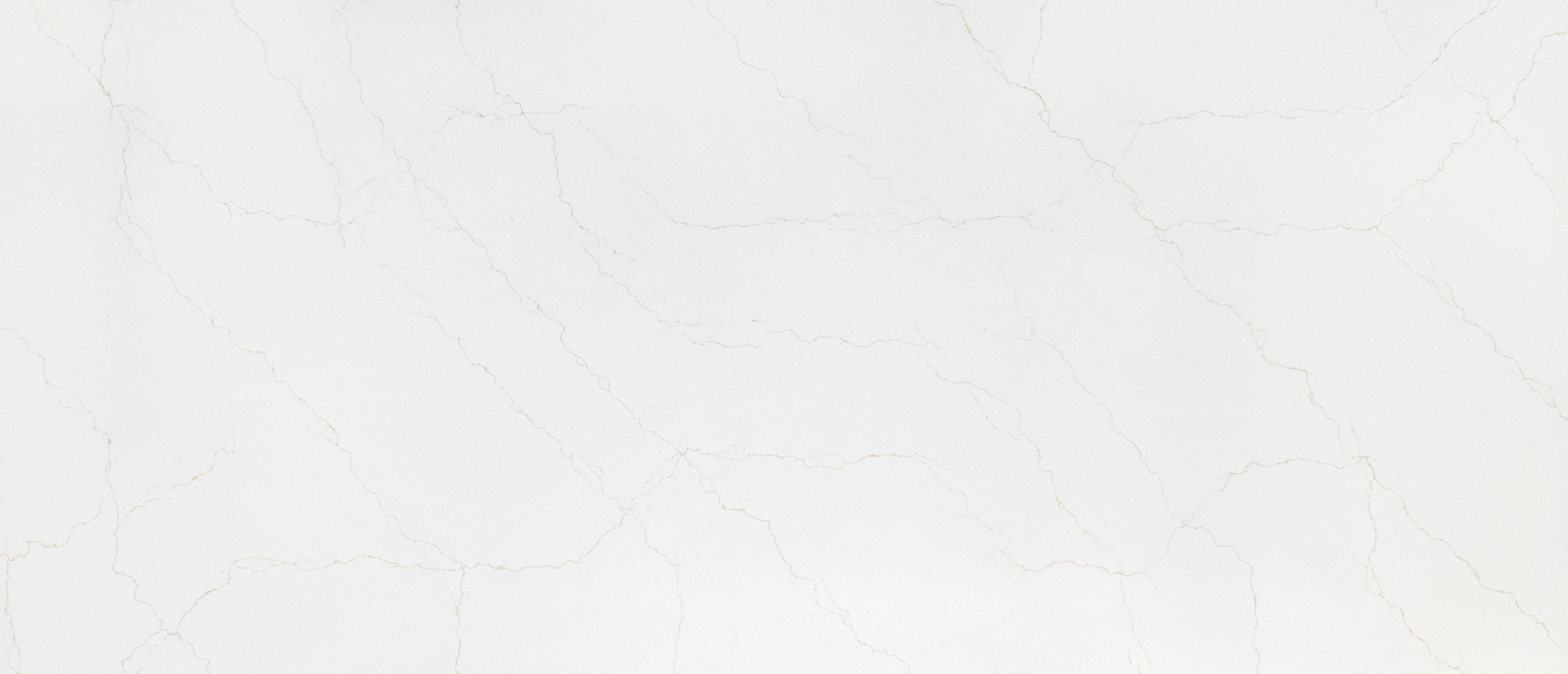
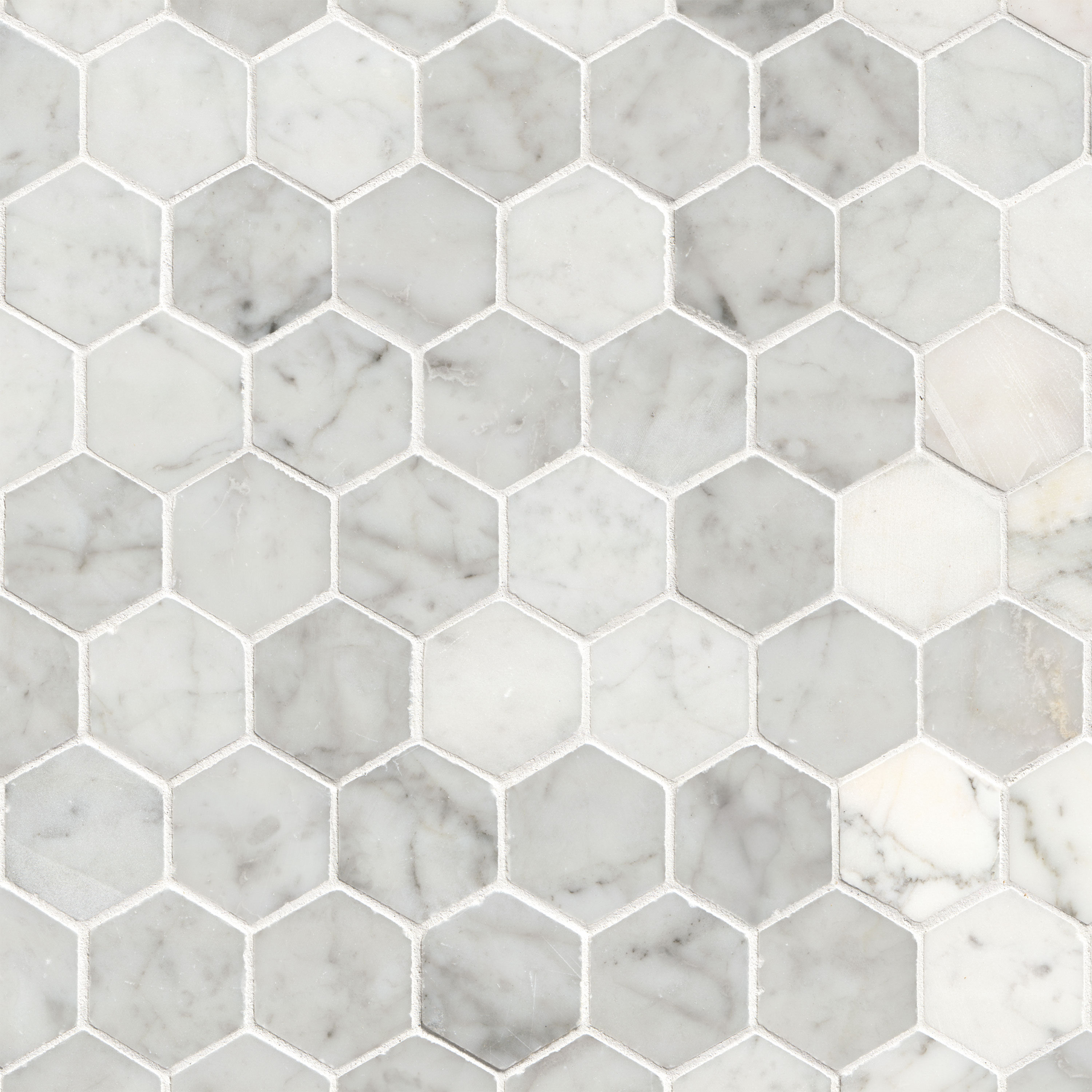
Bianco
A backsplash we install — get your free quote.
Details
- Material
- Porcelain
Installed by our own crew across the northwest suburbs.
How we do backsplash installation →
Free in-home quoteWhat kind of tile is Bianco?
We stock Bianco as porcelain. Porcelain is the hard-wearing end of the fired-clay family: dense body, tight edges, and no sealing. Ace sets backsplash after the countertop, because the layout is measured off the finished stone. At thirty to forty square feet, upgrading backsplash material costs far less than upgrading a countertop.
About Bianco
Porcelain is ceramic fired denser and harder. It absorbs almost no water, which is why it goes on floors and wet walls where plain ceramic would not.
Rated 5/5 for heat and 4/5 for a dropped pan — it shrugs off heat and handles a dropped pan. Day-to-day care is soap, water and a cloth. That is the entire routine.
Wall prep, layout, tile, grout, caulk — our crew does all of it, and we do it after the tops are in so the bottom course sits on a finished edge. Installed, this material benchmarks around $24/sq ft in the Chicago suburbs — the table below shows the full range and where it came from.
Specs
What is on the spec sheet — nothing inferred.
- Material
- Porcelain
- Primary Color(s)
- White-Warm
- PEI RATING
- 3
- Style
- Travertine
- Tile Type
- Glazed
- Coefficient Of Friction
- DCOF < 0.42
- Shade Variations
- V3
- Environmental
- Greenguard Gold, USGBC/LEED
- RECTIFIED/NON-RECTIFIED
- Rectified,Rectified
- Product type
- Tiles
Sizes and finishes
How it is actually sold — measured off the spec sheet, not rounded.
Sizes
Bianco is made in 4 sizes. Size is the decision people skip and then notice every day: it sets how much grout line ends up in the field, and a larger module on the same wall reads calmer than a small one.
- 12x24
- 3x18 BullNose
- 2x2
- 2x4
Planning the wall
What Bianco works out to on your wall, from its own published sizes.
| Size (inches) | Pieces per 10 sq ft | Grout line per sq ft |
|---|---|---|
| 12×24 | 5 | 1.5 ft |
| 2×2 | 360 | 12 ft |
| 2×4 | 180 | 9 ft |
Arithmetic on the published size; a straight grid layout. Herringbone and other patterns cut more pieces.
The size you pick changes the wall more than the color does: 12×24 needs about 5 pieces per 10 square feet, 2×2 about 360.
12×24 is large-format — any edge of 15 inches or more — and large-format tile needs a flatter wall than small tile does, so we check the wall before we quote it.
The spec sheet lists it as rectified: the edges are ground square after firing, which is what lets the joints run tight and straight.
Counts are before cuts — outlets, window returns and the ends of a run all take pieces. The install itself, from wall prep to caulk, is on our backsplash installation page.
Where it works
The applications this surface is actually rated for.
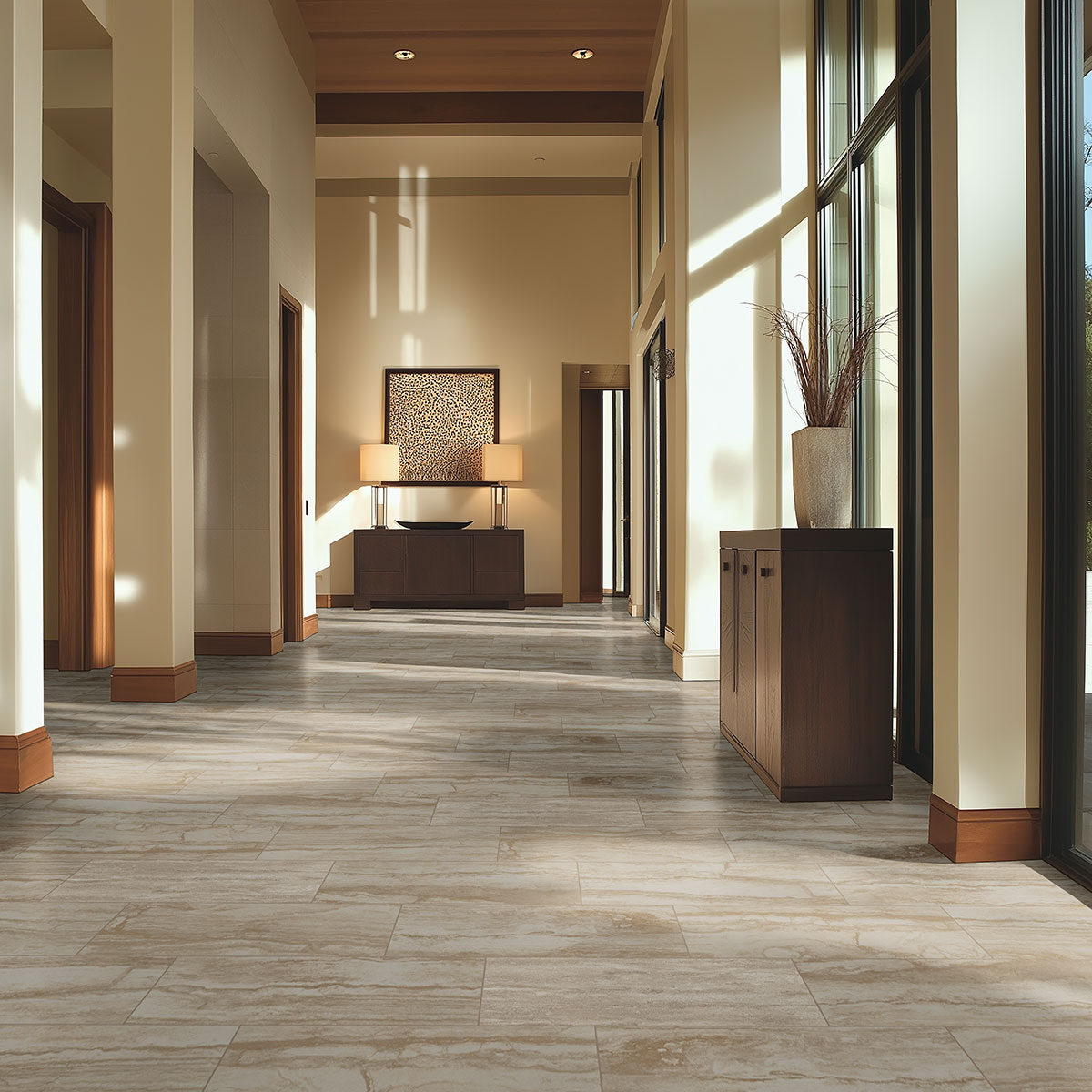
Where it is rated to go: flooring, at all of it at commercial duty.
Rated for
- Flooring — residential and commercial
Bianco or Carbone?
Bianco and Carbone are easy to confuse on a sample board: they share the same material, collection, style, glaze type, PEI rating, shade-variation rating, certifications, edge and sizes. What separates them:
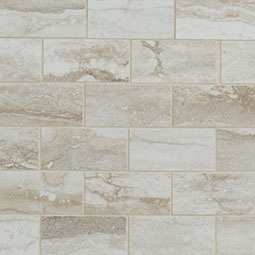
- Measured off each swatch, Bianco reads #80776E (mid, near-neutral) and Carbone reads #AA9B98 (mid-light, near-neutral), so Bianco sits darker than Carbone on the wall.
What to expect once it is installed
The ratings that decide whether the finished wall matches the sample.
Shade variation: V3 — moderate variation
Pieces will differ visibly. That is what makes the wall look like stone instead of wallpaper, but it means judging it from one piece will mislead you.
Wear rating: PEI 3
Its abrasion class is PEI 3 of a possible 5, meaning walls, counters and normal residential floors — the usual rating for a kitchen.
Certifications
What it holds: Greenguard Gold · USGBC/LEED. Gold is not a marketing tier — it caps what the material is allowed to give off indoors, measurably lower than the base certification. It earns LEED credit as well, where a project is counting them.
How it lives — durability & care
How Bianco wears, and how it is looked after.
On the independent material scale (1–5, higher is better; not a manufacturer claim), Bianco, as porcelain tile, rates 5/5 for heat, 4/5 for impact/chipping, 5/5 for moisture, 5/5 for scratch and 5/5 for stain.
Care routine
- Clean tile and maintain grout — Wipe weekly; reseal cement grout yearly · The tile itself is non-porous, so any mild cleaner works. The real maintenance item is the grout: keep it clean and reseal cement-based grout about yearly (or specify epoxy grout to skip it) so it resists grease and moisture behind the range and sink. · Avoid: Acidic cleaners on cement grout, steel wool · If you skip it: low
What it costs installed
Published benchmark ranges, so you can sanity-check any quote — including ours.
Typical price ranges as of 2025-08. For Bianco, the published Chicago-market benchmarks (not an Ace quote) are: porcelain tile backsplash, installed at $13–$35 per sq ft; kitchen backsplash project, tile (typical 30-40 sqft) at $500–$1,500 per project; remove existing backsplash at $3–$6 per sq ft.
Worked through for Bianco: a 30 square foot backsplash takes between about 15 and 1080 pieces, depending on which of its 3 sizes you pick before cuts, and at the $13–$35 per square foot installed benchmark for porcelain tile that is roughly $390–$1,050 for the wall, before tear-out, outlets and trim.
Sources: Fixr, 2025; BobVila.com, 2023; SlabWise, 2026
What to put next to it
Built from the color we measured off Bianco itself, not from its name.
Forget the name for a moment. The swatch measures #80776E — mid and near-neutral — which puts it nearest Slate Blue in our pairing data. It sits close to neutral, which means it will take direction from the cabinets rather than fight them.
Cabinets
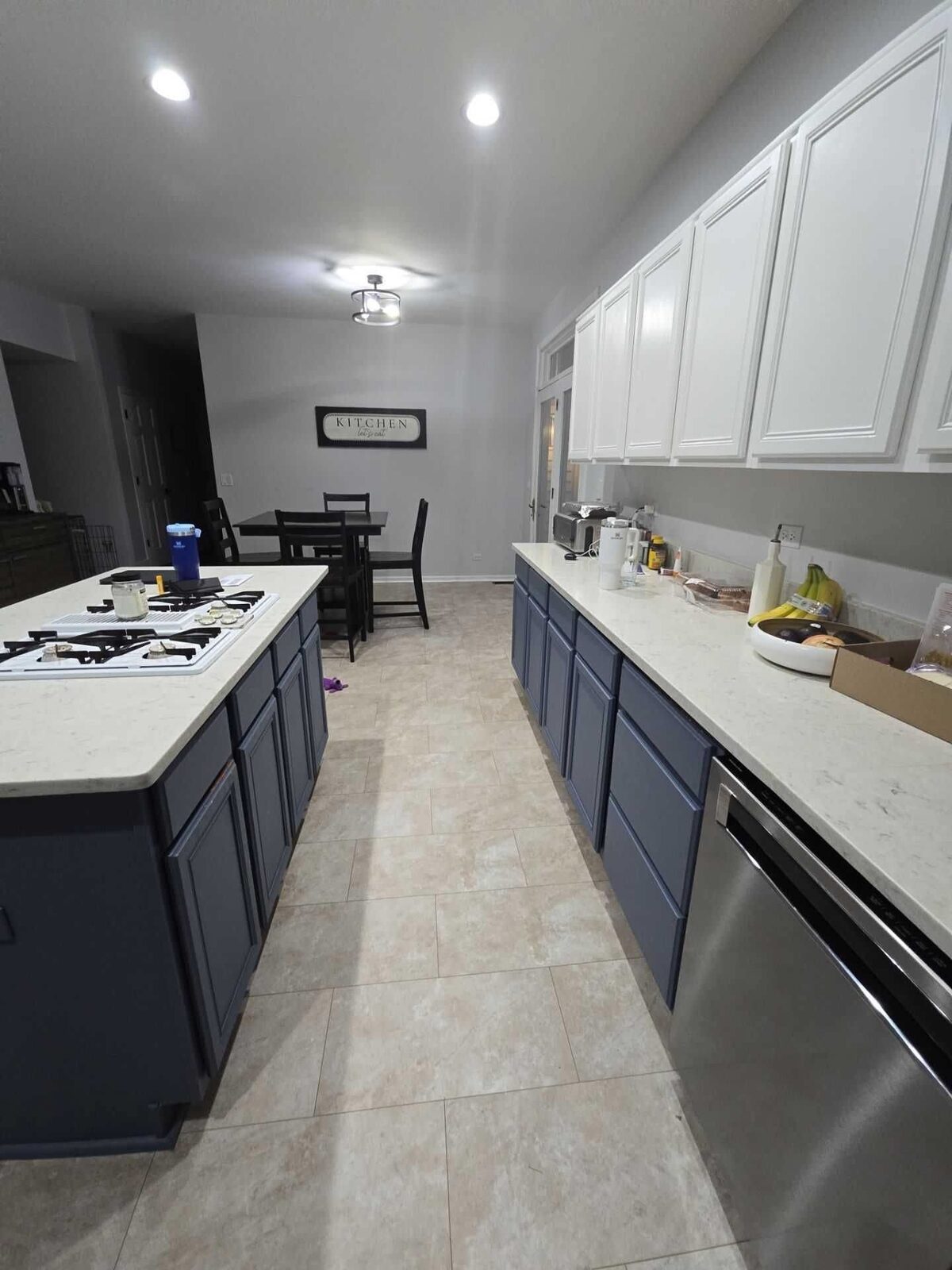
- Warm White / Ivory — A slate-blue island in a warm-white kitchen is the safest color move in the book — enough character to anchor the room, never enough to scare a future buyer.. Against this surface it is much lighter, so the cabinets carry the room and this recedes classic
Flooring
- Ash Blond Wood — Pale straw-blond ash underfoot takes the chill off slate-blue cabinetry, landing the room Scandinavian-coastal instead of cold.. Against this surface it is a step lighter, which lifts the surface without washing it out solid
Similar surfaces
Same family — worth seeing side by side before you commit.


Questions about Bianco
Answered from this product’s own spec sheet and our measurement of it.
What size is Bianco?
Bianco comes in 4 sizes: 12x24 · 3x18 BullNose · 2x2 · 2x4. Pick the size before the color. It decides how much grout line ends up in the field, and on the same wall a larger module reads calmer than a small one.
Where can I use Bianco?
Its maker rates it for flooring. We hold to that rating when we quote — installing outside it is how a warranty claim gets denied.
Will the tiles match the sample I saw?
Bianco is rated V3 — moderate variation. Expect visible differences in shade and pattern between pieces. Choose from several, and have the installer dry-lay and shuffle boxes before setting.
Can Bianco go on a floor?
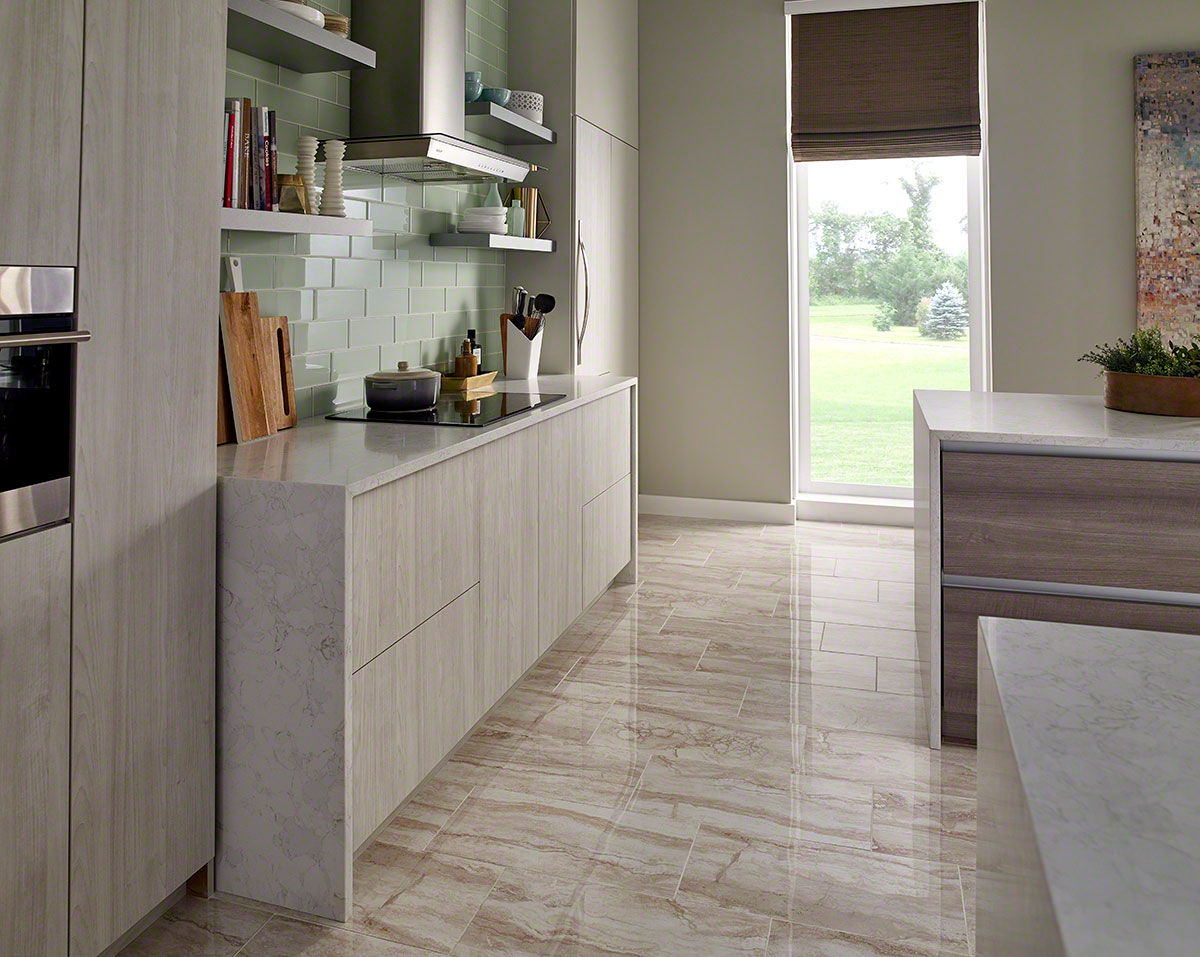
Yes. At PEI 3 it is rated for normal residential floors as well as walls and counters — the usual rating for a kitchen.
What color is Bianco, really?
We measured its own swatch at #80776E — mid and near-neutral. It sits close to neutral, so it takes direction from the cabinets rather than fighting them. Names are marketing; that number is what the camera saw.
Does Bianco need sealing?
No. Porcelain is vitrified almost to zero water absorption. The tile itself never needs sealing; cement grout still benefits from it.
Want this in your kitchen?
We supply and install Bianco out of our Streamwood shop — templated digitally, cut to your cabinets, installed by our own crew.
Ready for a real number?
Free in-home template and an honest quote — you keep your money until there's a countertop to trade it for.