
Sinks
Undermount and workstation sinks, cut into the stone by our crew.
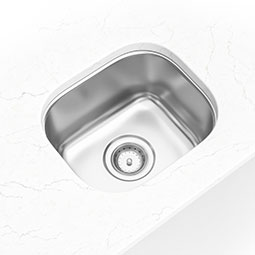 Metal
Metal
18G 1210
Stainless
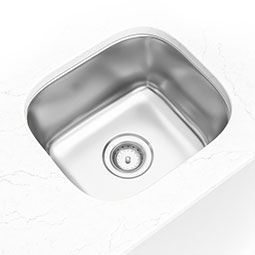 Metal
Metal
18G 1618
Stainless
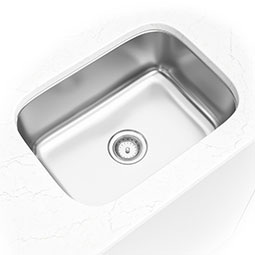 Metal
Metal
18G 2318
Stainless
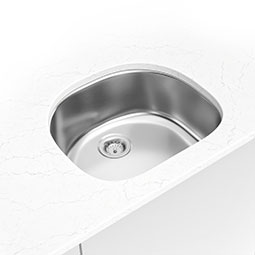 Metal
Metal
18G 2321
Stainless
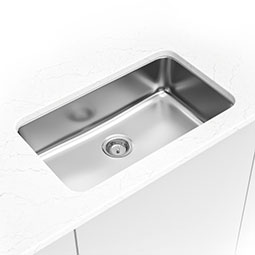 Metal
Metal
18G 3018
Stainless
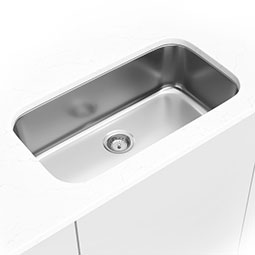 Metal
Metal
18G 3218
Stainless
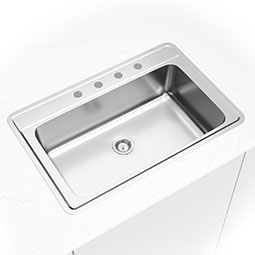 Metal
Metal
18G 3322
Stainless
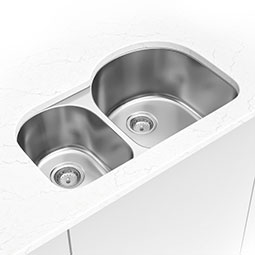 Metal
Metal
18G 40/60 - 3120
Stainless
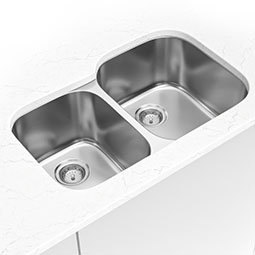 Metal
Metal
18G 40/60 - 3120S
Stainless
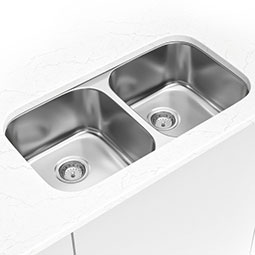 Metal
Metal
18G 50/50 - 3118
Stainless
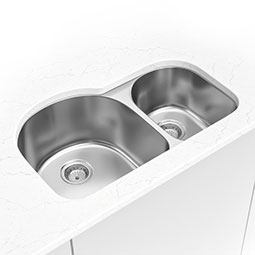 Metal
Metal
18G 60/40 - 3120
Stainless
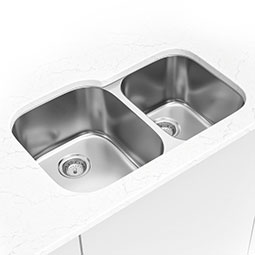 Metal
Metal
18G 60/40 - 3120S
Stainless
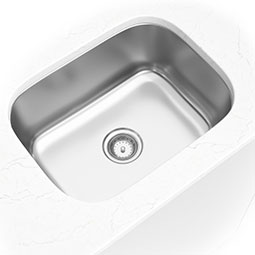 Metal
Metal
20G Bowl 2318
Stainless
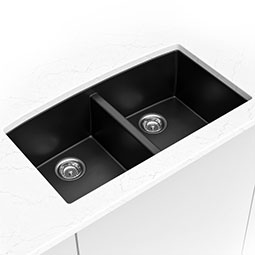 Engineered Quartz
Black Quartz Double Bowl 50/50-3219
Black
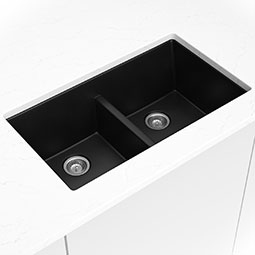 Engineered Quartz
Black Quartz Double Bowl 50/50-3319
Black
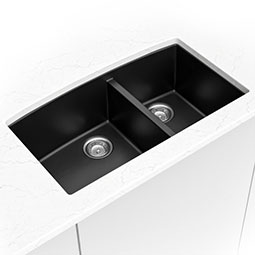 Engineered Quartz
Black Quartz Double Bowl 60/40-3219
Black
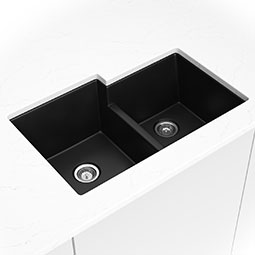 Engineered Quartz
Black Quartz Double Bowl 60/40-3221
Black
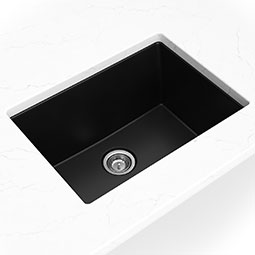 Engineered Quartz
Black Quartz Single Bowl 2418
Black
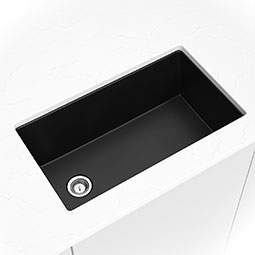 Engineered Quartz
Black Quartz Single Bowl 3119
Black
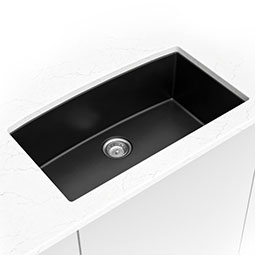 Engineered Quartz
Black Quartz Single Bowl 3219
Black
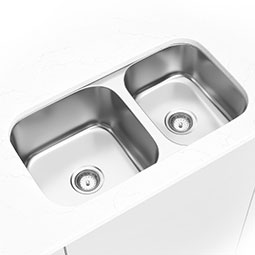 Metal
Metal
Double Bowl 18G 40/60 - 3218
Stainless
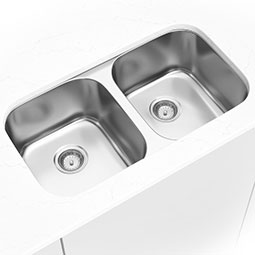 Metal
Metal
Double Bowl 18G 50/50 - 3218
Stainless
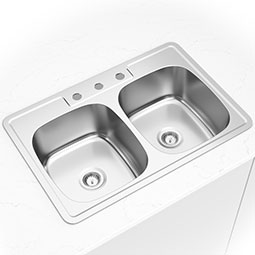 Metal
Metal
Double Bowl 18G 50/50 - 3322
Stainless
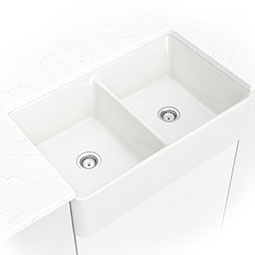 Ceramic
Fireclay Farmhouse White Double Bowl 5050-3220
White
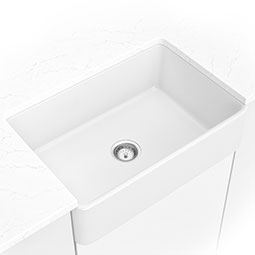 Ceramic
Fireclay Farmhouse White Single Bowl-3020
White
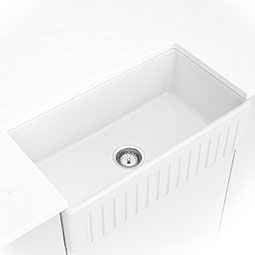 Ceramic
Fireclay Farmhouse White Single Bowl-3318
White
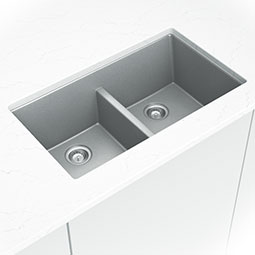 Engineered Quartz
Gray Quartz Double Bowl 50/50-3319
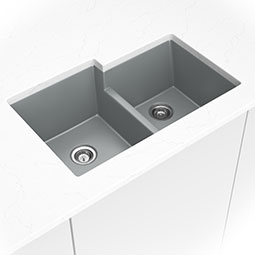 Engineered Quartz
Gray Quartz Double Bowl 60/40-3221
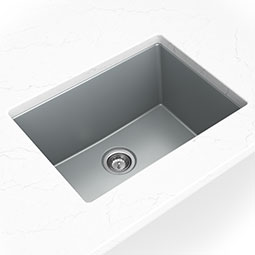 Engineered Quartz
Gray Quartz Single Bowl 2418
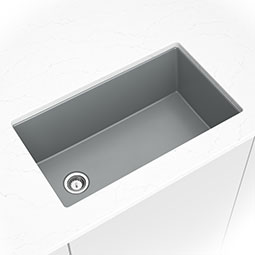 Engineered Quartz
Gray Quartz Single Bowl 3119
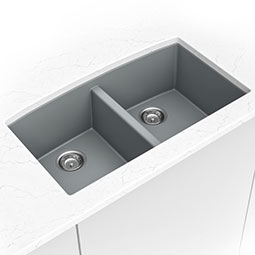 Engineered Quartz
Grey Quartz Double Bowl 50/50-3219
Gray
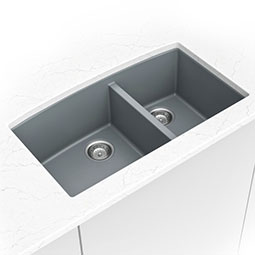 Engineered Quartz
Grey Quartz Double Bowl 60/40-3219
Gray
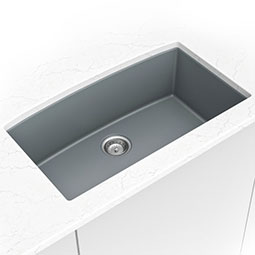 Engineered Quartz
Grey Quartz Single Bowl 3219
Gray
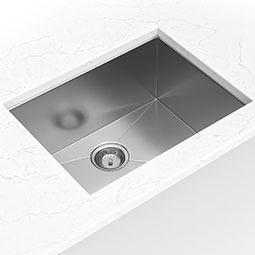 Metal
Metal
Handcrafted 16G 2318
Stainless
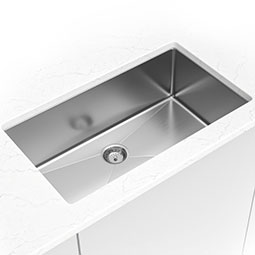 Metal
Metal
Handcrafted 16G 3219
Stainless
 Metal
Metal
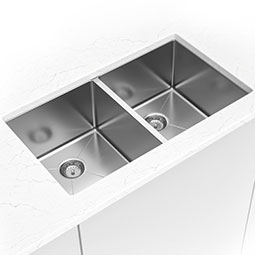
Handcrafted 16G 50/50-3219
Stainless
 Metal
Metal
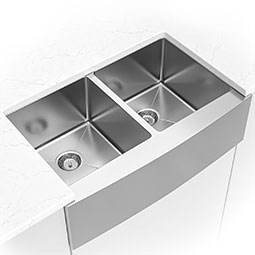
Handcrafted Farmhouse With Apron 16G 50/50-3321
Stainless
 Metal
Metal
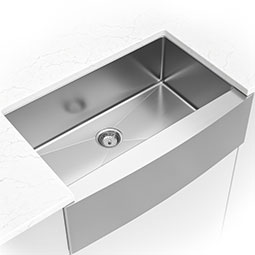
Handcrafted Farmhouse with Apron 16G 3321
Stainless
 Metal
Metal
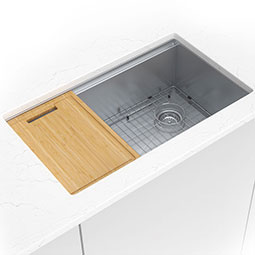
Handcrafted Workstation 3319
Stainless
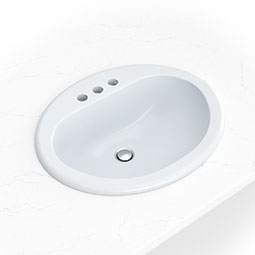 Porcelain
Overmount White Oval 2118
White
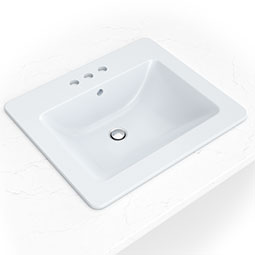 Porcelain
Overmount White Rectangle 2118
White
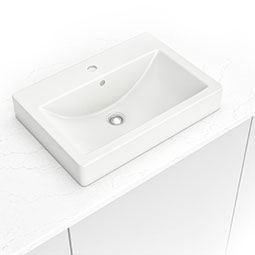 Porcelain
Overmount White Rectangle 2417
White
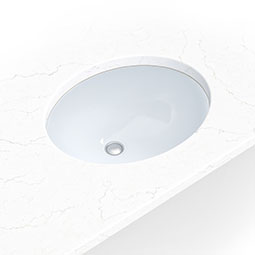 Porcelain
White Oval 1512
White
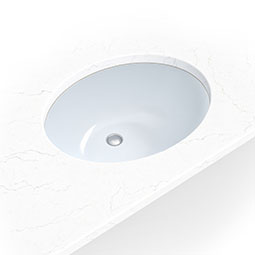 Porcelain
White Oval 1714
White
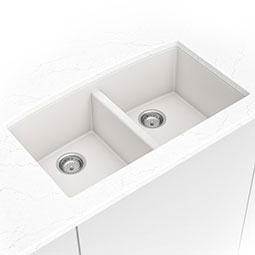 Engineered Quartz
White Quartz Double Bowl 50/50-3219
White
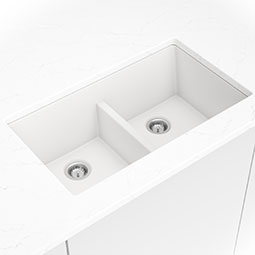 Engineered Quartz
White Quartz Double Bowl 50/50-3319
White
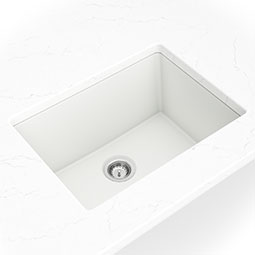 Engineered Quartz
White Quartz Single Bowl 2418
White
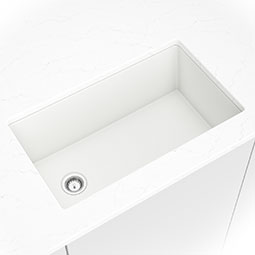 Engineered Quartz
White Quartz Single Bowl 3119
White
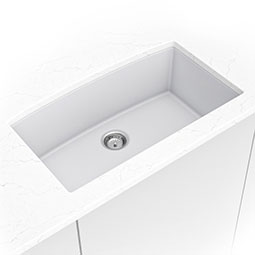 Engineered Quartz
White Quartz Single Bowl 3219
White
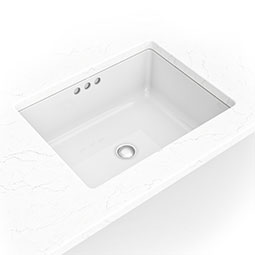 Porcelain
White Rect 2015 Flat
White
 Porcelain
White Rect 2015 Straight
White
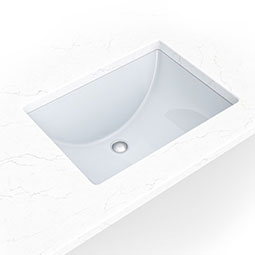 Porcelain
White Rectangle 1813
White
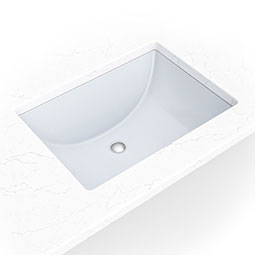 Porcelain
White Rectangle 2015
White
How to choose sinks
Design rules that hold up after the showroom lighting is gone.
60-30-10 color proportions
Split the kitchen roughly 60% dominant color (perimeter cabinets and walls), 30% secondary (countertops, backsplash, island, or floor), and 10% accent (hardware, faucet, lighting, stools). Treat it as a visual guideline, not a tape-measure spec.
Why: Proportion enforces hierarchy — one lead, one supporting act, one spark — so bold choices read intentional instead of chaotic.
Faucet decided before countertop fabrication
Pick the faucet - and every deck accessory (soap dispenser, air gap, filtered-water tap) - before countertops are fabricated. Each hole is drilled cleanly at the shop for about $65-$120; drilling installed stone at the sink later is risky and often refused. Bridge faucets need two holes at 8 in centers; high-arc pull-downs stand 14-19 in tall, so check window sills and upper cabinets first.
Why: Hole count, spacing, and spout clearance are fabrication inputs, not installation-day details. Hole pricing per fabricator quoting guidance; spacing and heights per faucet spec guidance.
Negative sink reveal on soft stone
Avoid negative (overhung) sink reveals on marble and other soft stones, and weigh them carefully anywhere: the thin overhanging lip is one of the easiest edges in the kitchen to chip, and the hidden sink rim beneath it traps food film and mold unless cleaned deliberately.
Why: Fabricator guidance: overhanging edges risk chipping and conceal a rim that needs regular cleaning; zero reveals demand costly precision, and positive reveals remain the forgiving default most manufacturers template for.
Sink mount vs countertop material
Pair undermount and apron-front sinks with solid surfaces - granite, quartz, quartzite, or solid surface. On laminate or tile countertops, default to a drop-in sink: the exposed core at an undermount cutout has no finished edge and wicks water.
Why: Undermount rims clamp and bond to the underside of the slab; laminate substrates (particleboard/MDF) swell when the unsealed cutout edge stays wet. Industry consensus across fabricator guidance; no single citation.
Sink-to-cabinet sizing
Choose a sink at least 3 inches narrower than its base cabinet: a 30 in sink for a 33 in cabinet, a 33 in sink for a 36 in cabinet. Inside the cabinet, keep about 1 inch of clearance around the bowl so installers can set undermount clips and reach plumbing.
Why: Cabinet interiors measure 1-1.5 in less than nominal width once side panels are counted; mounting hardware, faucet supplies, and installer hands all need working room.
Templating countertops before the sink is on site
Never let countertops be templated before the physical sink is on site. Fabricators cut the opening and reveal to the actual sink - fireclay can vary up to 2% in size out of the kiln - and once the cutout is made, the reveal cannot be changed without replacing the top.
Why: Fabricator guidance is blunt: get the sink in hand before you template. Re-template fees of $75-$150 apply when site conditions are not ready, and a mismatched cutout is unfixable.
Appliance landing areas
Plan uninterrupted counter landing zones: 15 inches beside the refrigerator handle, 12 and 15 inches flanking the cooking surface, 24 and 18 inches flanking the sink, and 15 inches by the microwave and wall oven; where two landing zones meet, use the larger requirement plus 12 inches.
Why: Landing areas are where hot pans, groceries, and wet dishes actually go; kitchens that skip them put hot cookware on floors and tables.
Hardware does not have to match the faucet
Cabinet hardware may deliberately contrast with the faucet and lighting. Keep the dominant metal on the largest presences (appliances, faucet) and let hardware carry the secondary or accent finish.
Why: Matching every metal to one finish reads as ordered-from-one-page; a contrasting hardware finish is one of the least expensive ways to make a kitchen look designed.
Materials compared
5 materials, rated on the six things that actually go wrong.
| Material | Price tier | Care | Heat | Scratch | Stain | Etch | Impact | Moisture |
|---|---|---|---|---|---|---|---|---|
| Stainless steel | Budget | Low | — | — | — | — | — | — |
| Granite composite | Mid | Low | — | — | — | — | — | — |
| Fireclay | Premium | Low | — | — | — | — | — | — |
| Enameled cast iron | Premium | Medium | — | — | — | — | — | — |
| Copper | Luxury | High | — | — | — | — | — | — |
Durability 1–5, higher is better. Independent ratings — em dash means no published rating for that pairing.
The honest trade-offs
- Stainless steel — Light, affordable, heat-tolerant, easy to clean; suits any style; thicker (lower-gauge) bowls resist denting and run quieter Trade-off: Shows water spots and fine scratches; thin builds (20+ gauge) dent and sound tinny; brushed finishes hide wear better than mirror
- Granite composite — Matte surface hides scratches and water spots; muted, quiet bowl; colorfast blacks, grays, browns, whites; lighter than fireclay or cast iron Trade-off: Extreme thermal shock can damage the resin; dark matte bowls show hazy mineral film in hard-water areas; limited glossy or bright colors
- Fireclay — Glossy, non-porous glaze resists stains and abrasion; classic farmhouse look; cleans with mild cleansers only Trade-off: Heavy (a 30 in farmhouse commonly 100-150 lb) and needs a reinforced cabinet; can chip or crack on hard impact; kiln firing varies dimensions up to 2%, so counters must be templated to the actual sink
- Enameled cast iron — Deep glossy color options; extremely rigid and quiet; long manufacturer warranties are common Trade-off: Extremely heavy (needs support brackets or reinforced base); a chipped spot exposes iron that can rust; abrasive cleaners dull the gloss
- Copper — Naturally antimicrobial; living finish develops a rich patina; distinctive farmhouse and vintage looks Trade-off: Living finish darkens unevenly and acidic foods strip patina spots; soft metal dents; among the most expensive sink materials
What it costs
Chicago-market benchmark ranges, dated so you can see how stale they are.
| Line item | Typical range | Unit | As of |
|---|---|---|---|
| Farmhouse sink cutout premium on a countertop fabrication quote | $150–$400 | per project | 2026-07 |
| Farmhouse/apron sink conversion (installed) | $700–$2,200 | per project | 2026-02 |
| Kitchen sink replacement, drop-in (installed) | $300–$900 | per project | 2026-02 |
| Kitchen sink replacement, undermount (installed) | $500–$1,400 | per project | 2026-02 |
| Sink cutout | $150–$400 | per cutout | 2026-07 |
| Sink or faucet cutout in stone countertop | $100–$500 | per cutout | 2025-01 |
Benchmarks, not an Ace quote. Ask us for a firm number on your kitchen.
Care, by material
What each surface actually asks of you once it is in.
Copper
- Preserve or manage the living patina (Daily rinse; wax periodically) — A copper sink is a living finish. Rinse and towel-dry after use so mineral spots don't set, and expect the tone to darken and mottle over time. Apply a copper wax periodically to keep shine, or just clean gently to let it patina; acids will strip bright spots. Avoid: Acidic cleaners such as vinegar and citrus, abrasive pads, standard metal polishes if you want to keep the patina
Enameled cast iron
- Clean without scratching the enamel (Daily / weekly) — The porcelain-enamel coating scratches and can chip, so clean with mild soap and a soft sponge or a baking-soda paste for stains. Don't leave heavy cast-iron cookware sitting in the basin, and use a bottom grid. Avoid: Abrasive cleaners and pads, steel wool, dropping heavy pans that chip the enamel
Fireclay
- Clean the glazed surface (Daily / weekly) — Fireclay's baked enamel is tough but scratchable; clean with mild soap and a soft sponge or cloth, and lift marks with a baking-soda-and-water paste. A bottom grid prevents metal scuffs from pots. Avoid: Steel wool, wire brushes, harsh abrasive powders
Granite composite
- Clean and prevent mineral film (Daily wipe; deep clean weekly) — Granite-composite sinks are hard and non-porous; wipe with mild soap and water and dry to prevent hard-water film, which shows most on dark sinks. For buildup, a baking-soda paste or a little mineral oil buffed on restores the finish. Avoid: Bleach and harsh chemicals that can discolor, abrasive scourers
Stainless steel
- Stainless sink cleaning (weekly) — Rinse and towel-dry after heavy use to prevent water spots and surface rust from trapped iron particles. Weekly, scrub WITH the grain using a mild abrasive like Bar Keepers Friend or baking soda and a non-scratch pad; rinse well. Do not leave cast-iron pans, wet sponges, or chloride-heavy cleaners sitting in the basin. Avoid: Steel wool (embeds carbon steel that rusts), bleach soaking, letting acidic or salty liquids pool for days
Colours that work together
Seven rules and the pairings that survive them.
- Large surfaces (cabinets, counters, floors) must share undertone temperature; metals and accents may cross temperature deliberately. warm/cool clashes read as 'something is off' before anyone can name it
- One hero surface per kitchen — dramatic stone, bold island color, OR statement backsplash. The rest support. two heroes compete; three shout
- Roughly 60% dominant (cabinets/walls), 30% secondary (counters/floor), 10% accent (hardware, lighting, stools). proportion keeps bold choices from taking over
- When mixing values, put the darker color low (island, lowers) and lighter high (uppers, walls). rooms feel grounded, not top-heavy
- Approve every white/gray pairing in the actual kitchen's daylight — north light cools everything, south light warms it. undertones shift dramatically by exposure; the #1 repaint cause
- Match finish maintenance to the household: matte black + hard water, marble + lemon cooks, and gloss white + toddlers are lifestyle mismatches. a color you can't maintain becomes a color you resent
- Commit trends on repaintable/replaceable layers (walls, hardware, stools) and keep 20-year layers (stone, floors) closer to neutral. counters outlive color fashion 3:1
White Veined (Marble-Look)
- Cabinets: Pure White, Charcoal, Oxblood Burgundy
- Island: Navy, Walnut, Forest / Emerald
- Backsplash: Pure White
Black / Charcoal Stone
- Cabinets: Pure White, Natural / White Oak
Questions about sinks
Are dovetail drawers and soft-close undermount slides worth it?
For a kitchen you plan to live in, yes - drawers take more open-close cycles than anything else in the kitchen and are usually the first thing to fail. A hardwood or Baltic-birch box with 5/8-inch sides and dovetailed corners on full-extension undermount soft-close slides (Blum, Hettich, Grass, Salice are the common quality names) will outlast stapled particleboard drawers on economy rollers by a decade or more. Skip the upgrade only on a rental or short-term flip where the price delta will not return.
Are wood countertops practical around a kitchen sink?
Wood and standing water are enemies: lapsed finish near a sink turns black, and the wood can cup or warp. If you want butcher block, the lower-risk patterns are using it away from the sink (island or baking zone) with stone or solid surface in the wet run, or committing to a marine-grade film finish and immediate wipe-downs at an overmount sink. On sanitation, studies show properly cleaned wood is comparable to plastic surfaces — the real issue is water discipline, not germs.
Are workstation sinks worth the extra money?
A name-brand stainless workstation sink retailed around $469-$990 in mid-2026, versus roughly $100-$600 for a comparable plain bowl - you are paying for the machined ledge plus a fitted cutting board, colander, and drying rack. In a small kitchen the ledge genuinely adds prep space over the bowl; in a large kitchen with generous counters it is more of a nice-to-have. Two honest cautions: buy accessories from the sink maker, because generic ones often do not glide on the ledge, and plan on a pull-down faucet to reach the corners of the deep single bowl.
Can I put a farmhouse sink into my existing cabinets?
Usually yes, with real modification: the horizontal rail above the door opening comes out, the doors get shortened, and the cabinet gets a reinforced sub-frame because fireclay and cast iron apron sinks weigh 100-200 lb before water. Budget several hundred dollars for that cabinet work on top of the sink itself, and expect the whole farmhouse install to land in the $700-$2,200 range. As a sizing rule, a 33 in apron sink is the practical maximum for a standard 36 in sink base.
Can I reuse my existing sink when I replace the countertops?
Sometimes, but the trades treat it as a gamble: an existing undermount is bonded to the old slab and can be damaged during demolition, and the new cutout must then match a sink that may be discolored, scratched, or slightly out of square. Drop-ins survive reuse much better. Since new fabrication is the cheapest moment to set a sink and decent stainless bowls start around $100-$300, most homeowners come out ahead putting a new sink under new stone - reuse mainly makes sense for a recently purchased or premium sink in verified good condition.
Can an undermount sink really fall off the countertop?
A properly installed undermount is held by mechanical clips or anchors plus silicone - not adhesive alone - and does not simply fall. The failures you read about almost always trace to caulk-only installs or a heavy cast iron bowl hung without support brackets. Ask your installer what physically carries the load, and do not store heavy items pressing on the bowl. If a sink ever starts to sag or the rim seam opens, water is reaching the seam and the cabinet below - have it re-supported promptly, not just re-caulked.
Narrowed it down?
Bring a colour, a rough measurement, or nothing at all — we template for free and quote in one number.
Ready for a real number?
Free in-home template and an honest quote — you keep your money until there's a countertop to trade it for.