
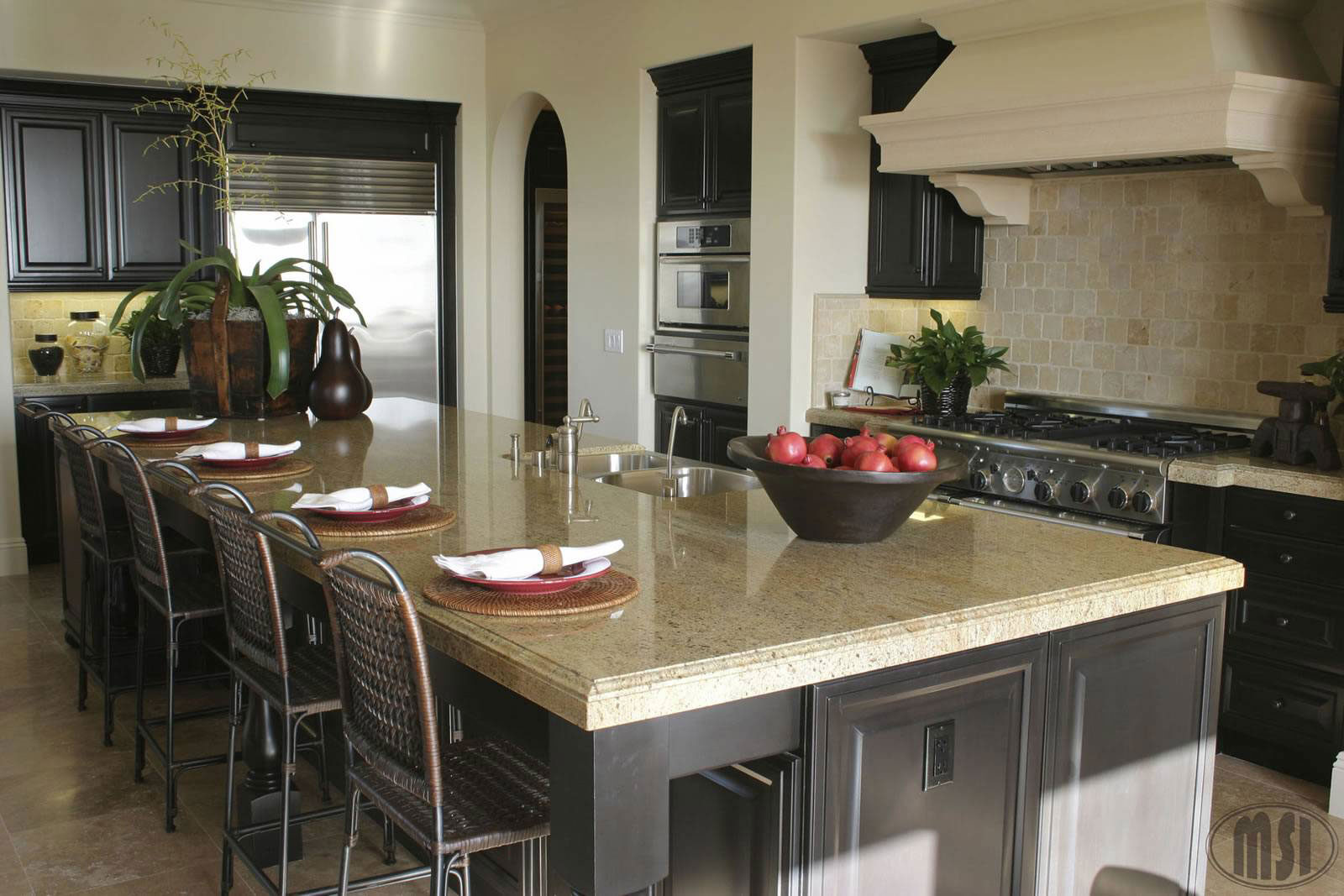
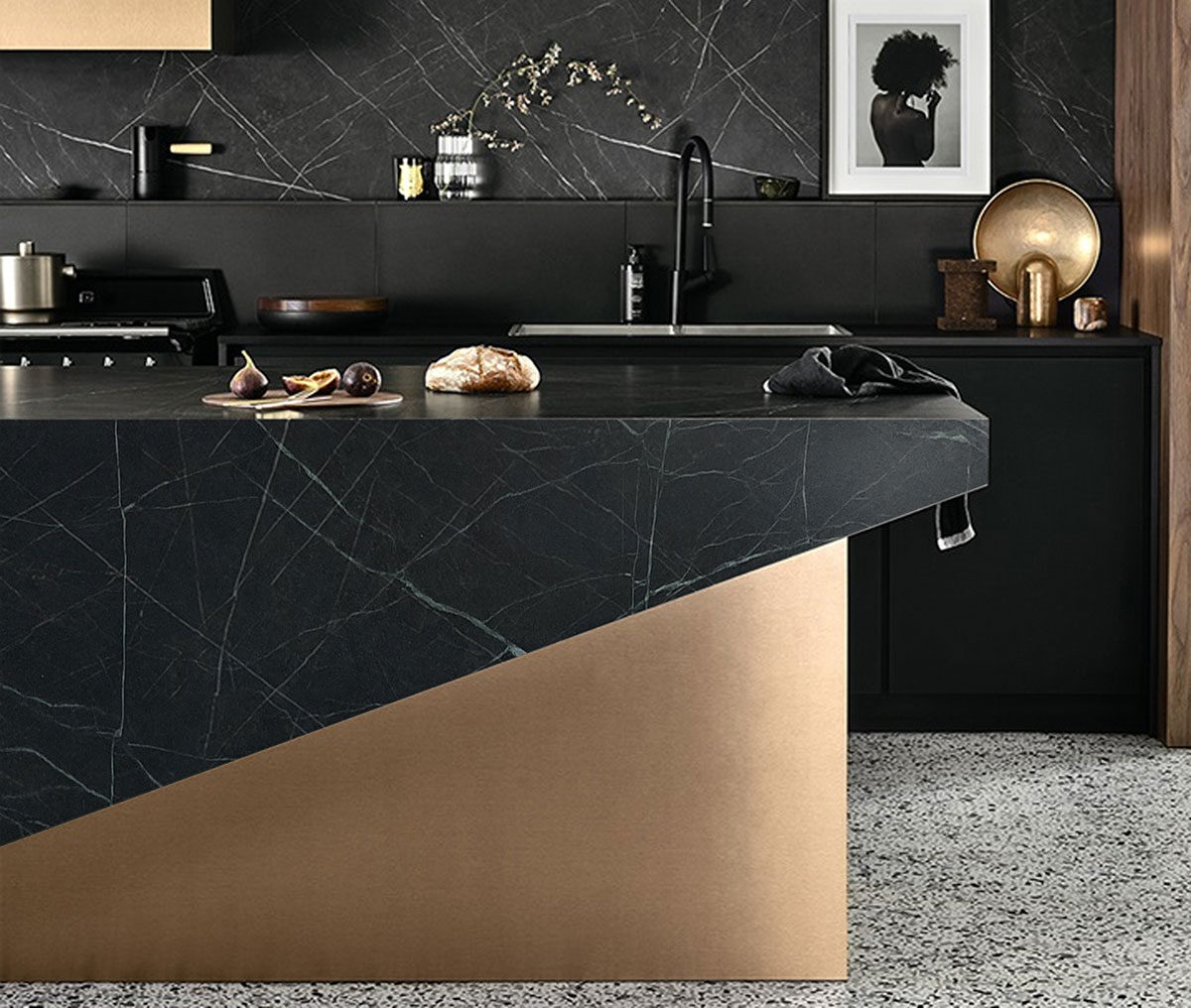
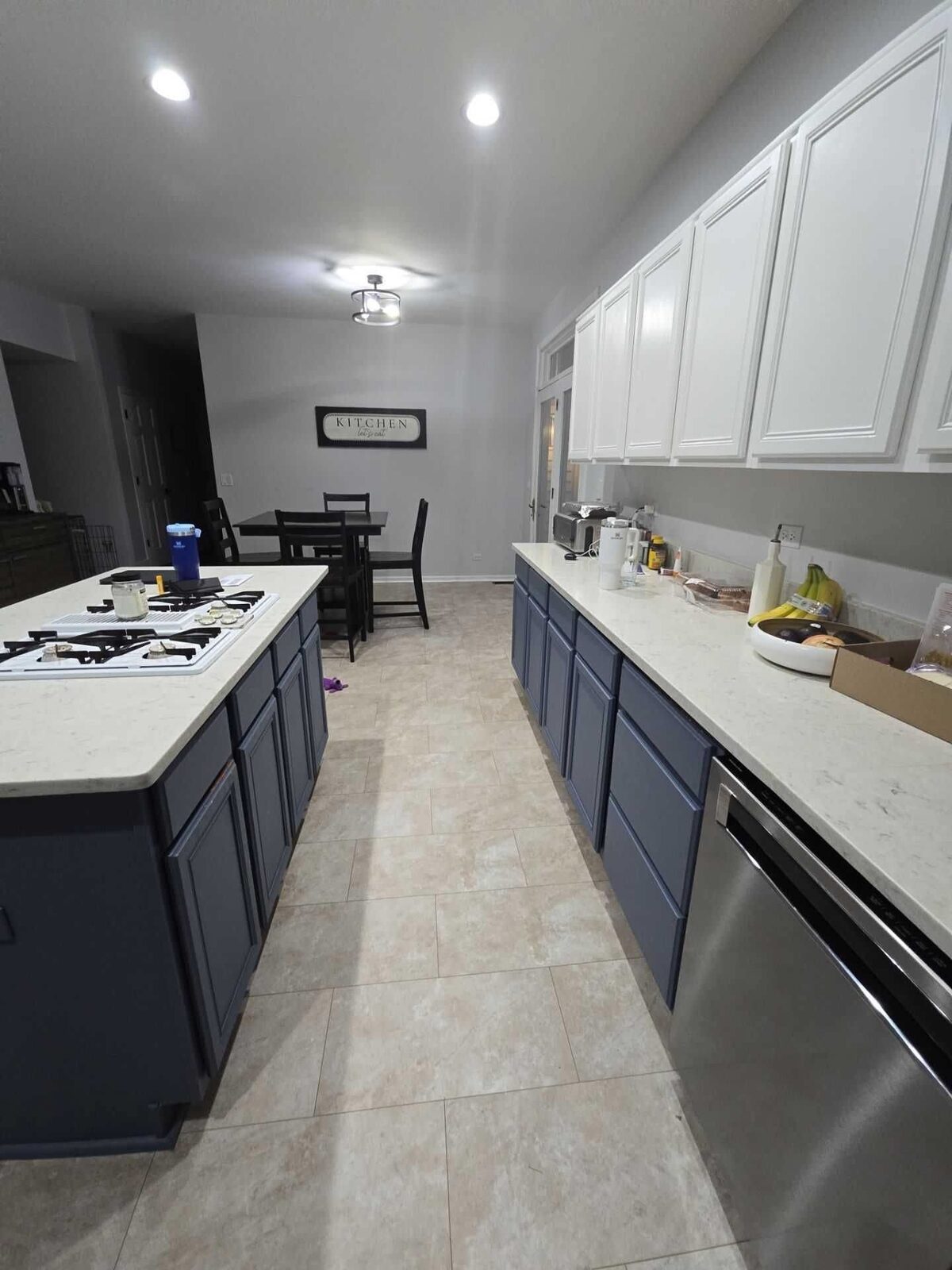
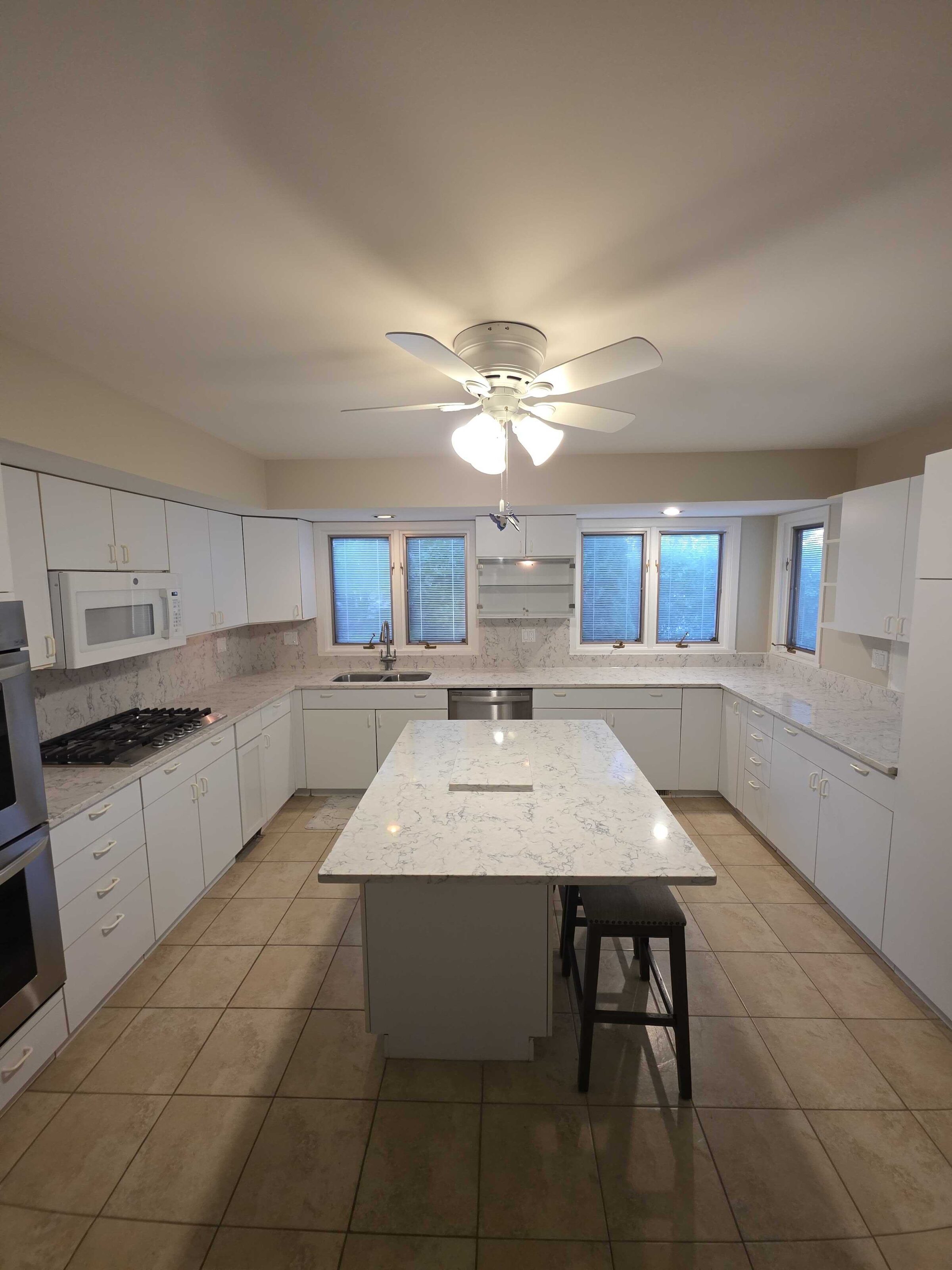
Countertop edge profiles
The 12 edge shapes we grind into the exposed front of a countertop, drawn in cross-section: 3 included on most quotes, 3 upgrades and 6 premium profiles.
What the edge decides
The edge profile is the shape ground into the exposed front of the countertop. We cut it in our own shop, on the same machines that cut the slab, and it changes three things: how the kitchen reads, how the counter takes a knock, and how easily it wipes clean. Rounded shapes shed impacts that chip a sharp corner, and every concave shape is a place for crumbs to collect.
You do not have to pick one edge for the whole kitchen. A simple edge on the perimeter and a decorative one on the island puts the upgrade where people see and touch it. 10 of the profiles below can be tried on your own plan in the design studio.
The profiles, in cross-section
Each drawing is a slice through the front of a countertop: the finished edge is on the right, and the slab continues past the break on the left.
-
Eased
A square edge whose two sharp corners are lightly softened. It is the default on our quotes.
- Against a knock
- Fair; the softened corners take the edge off a knock.
- Cleaning
- One pass.
- Suits
- Almost any kitchen.
-
Pencil
The top corner rounded to roughly the radius of a pencil tip, with a flat face below.
- Against a knock
- Good on the rounded top corner.
- Cleaning
- One pass.
- Suits
- Modern and transitional kitchens.
-
Bevel
A flat 45-degree cut across the top corner that throws a thin shadow line. A wide bevel costs more.
- Against a knock
- Fair.
- Cleaning
- One pass.
- Suits
- Modern and transitional kitchens, shaker doors.
-
Half bullnose
The top rounded over, the underside left square, so the slab keeps its thickness from the front.
- Against a knock
- Good; no sharp top corner.
- Cleaning
- Easy, but drips can follow the curve under.
- Suits
- Family kitchens and transitional styles.
-
Full bullnose
Rounded top and bottom into a half circle. It makes the slab look thinner.
- Against a knock
- The most forgiving shape there is: it has no corner.
- Cleaning
- Easy, but drips roll under onto the cabinet fronts.
- Suits
- Traditional kitchens.
-
Cove
A concave scoop cut along the top edge: decorative, and quieter than an ogee.
- Against a knock
- Fair; the thin lip is the weak point in soft stone.
- Cleaning
- The channel needs a detail wipe.
- Suits
- Traditional and formal kitchens.
-
Ogee
The classic S-curve: a concave sweep that rolls into a convex curve.
- Against a knock
- Fine detail is fragile in marble, sturdier in granite and quartz.
- Cleaning
- The hollow of the S traps grease.
- Suits
- Traditional and formal kitchens.
-
DuPont
A short vertical step at the top that breaks into a rounded curve below.
- Against a knock
- Fair.
- Cleaning
- The step collects crumbs.
- Suits
- Large, formal kitchens; it gives up a little counter depth.
-
Chiseled rock face
A deliberately rough, broken-stone face for a natural look.
- Against a knock
- Hides small chips better than any other edge.
- Cleaning
- The hardest to keep clean: texture holds grime.
- Suits
- Rustic, lodge and outdoor kitchens.
-
Laminated double
A second strip of the same stone bonded under the front edge, so a 3 cm top reads as 6 cm.
- Against a knock
- Good; the bond line is the weak point.
- Cleaning
- Easy.
- Suits
- Kitchens that want a heavier look for less than a miter.
-
Mitered built-up
The top and a front apron each cut at 45 degrees and joined at the corner, so the stone reads several inches thick and the veining turns the corner.
- Against a knock
- A hard knock right on the joint can chip it, and seam repairs show.
- Cleaning
- Easy.
- Suits
- Modern kitchens and statement islands.
-
Waterfall
The top turns 90 degrees and runs down the side of an island to the floor, usually mitered at the corner.
- Against a knock
- The vertical face lives at shoe height and takes kicks and vacuum scuffs.
- Cleaning
- Easy.
- Suits
- Modern kitchens; it also protects the cabinet end panel.
What each tier costs in a Chicago-area kitchen, and why decorative edges cost more, is in our edge guide below. Your quote itemizes the edge by the foot.
Ready for a real number?
Free in-home template and an honest quote — you keep your money until there's a countertop to trade it for.