
Oak kitchen, terracotta floor
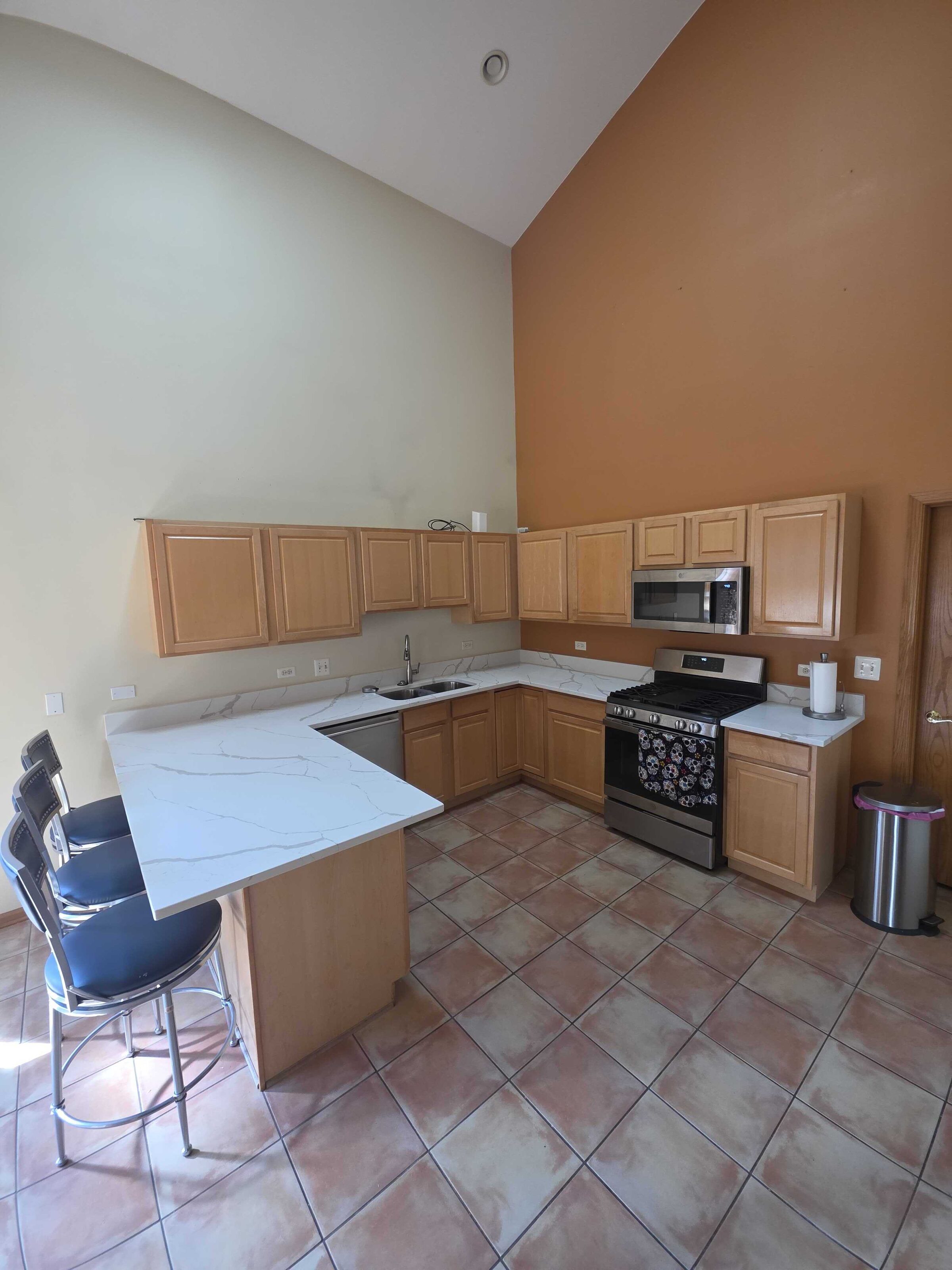
A tan laminate peninsula replaced with a dramatically veined white quartz, against oak cabinets and a terracotta tile floor.
- Material
- Veined white quartz
- Service
- Quartz Countertops
- Completed
- July 2026
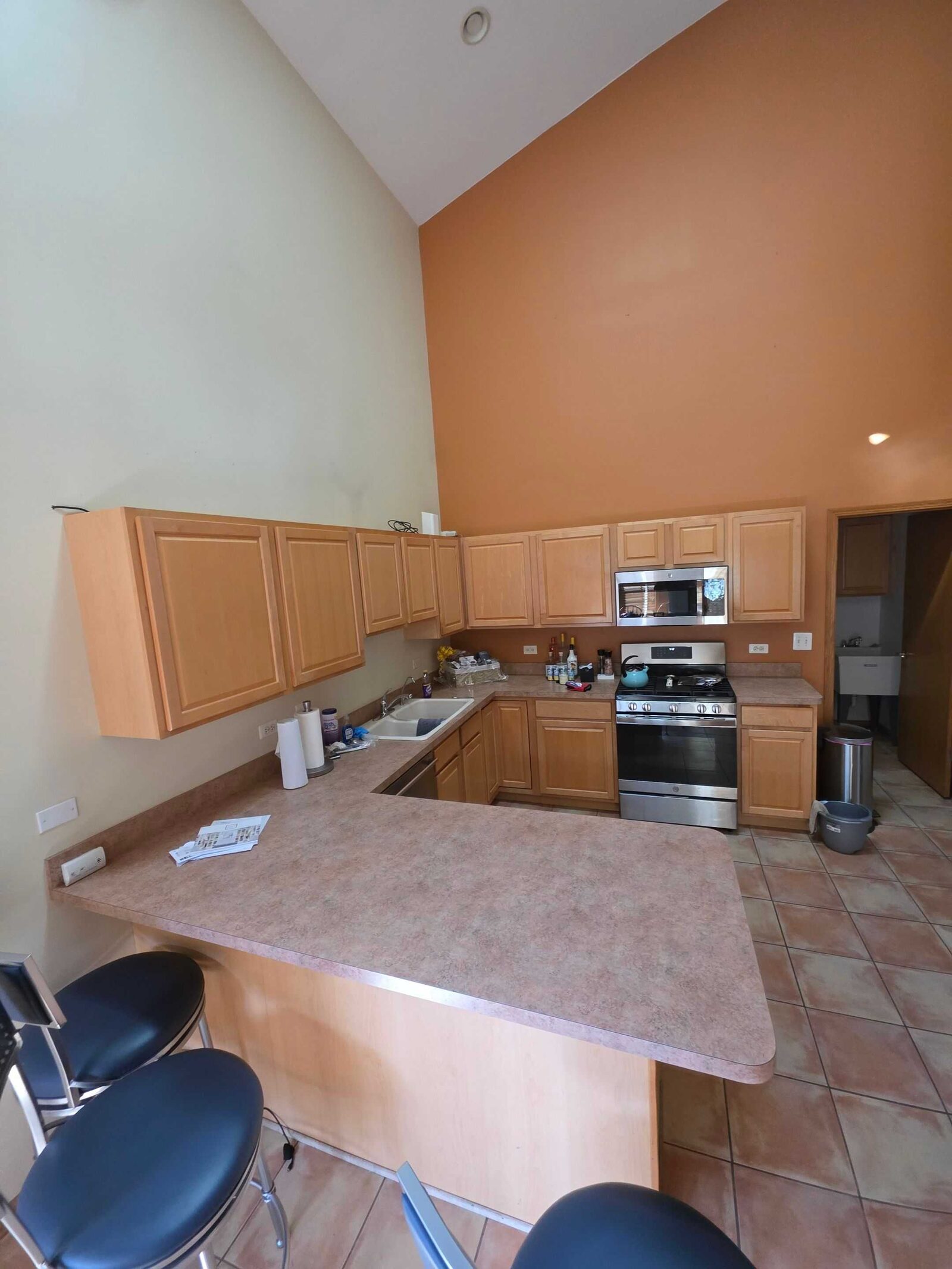
Oak cabinets, terracotta tile and a vaulted ceiling — a warm room throughout, with a tan laminate counter that added a fourth warm tone and flattened all of them.
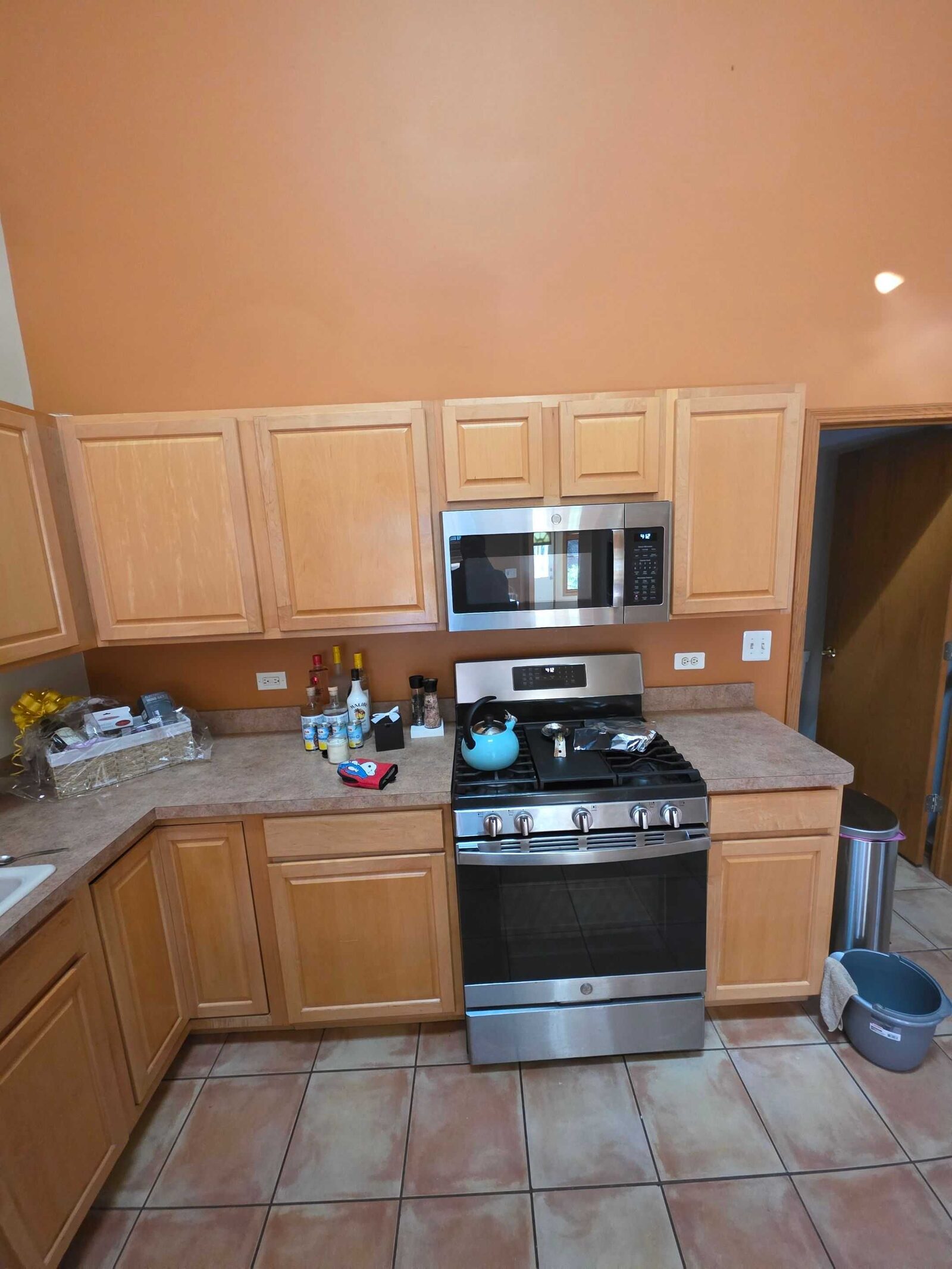
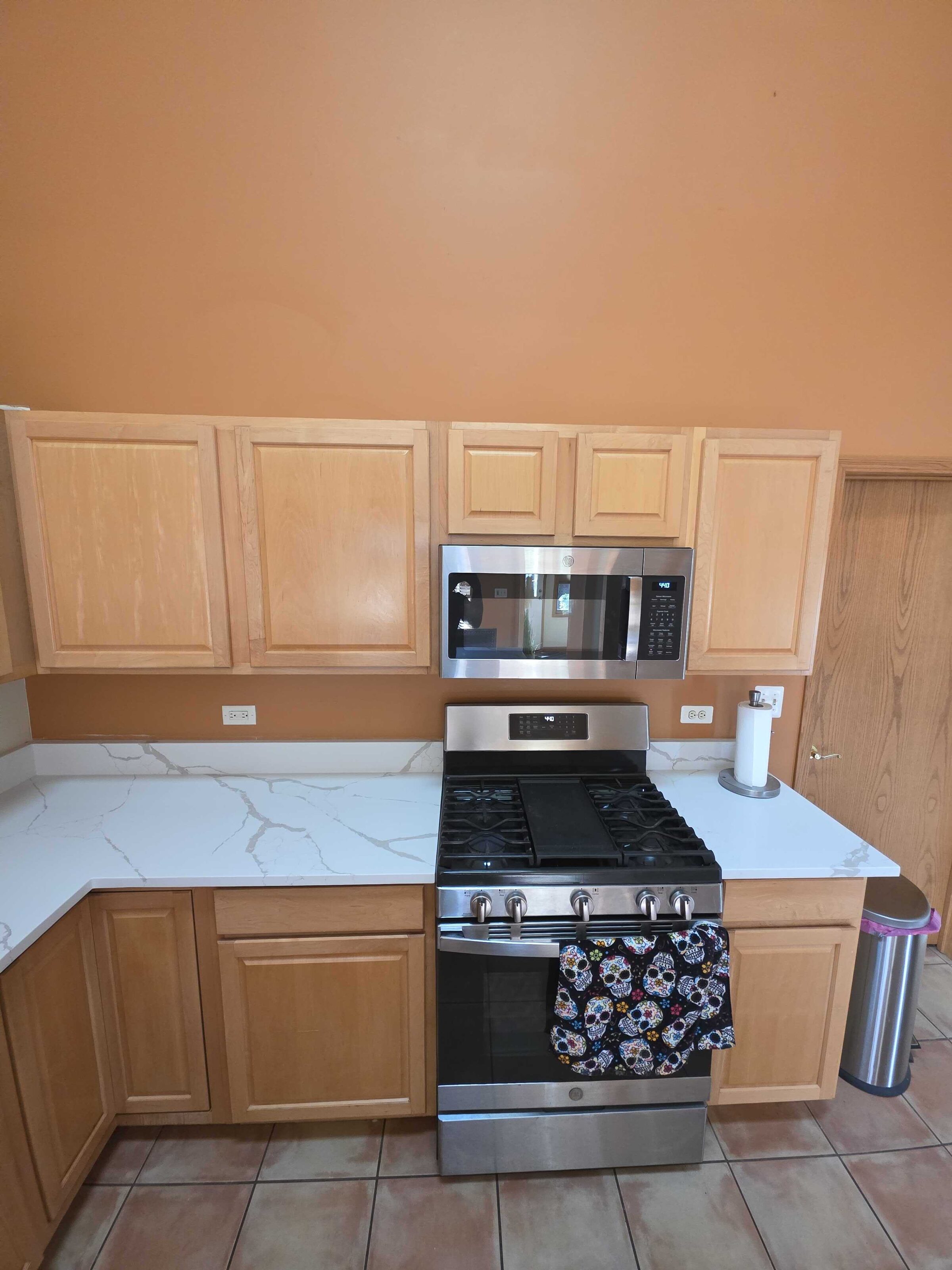
We went the other way with the replacement: a white quartz carrying a strong gray vein, which is the one cool element in the room and the reason the oak and the terracotta now read as deliberate rather than dated. The peninsula is the piece that shows it best, running out into the room with the vein traveling right across the overhang.
Before and after
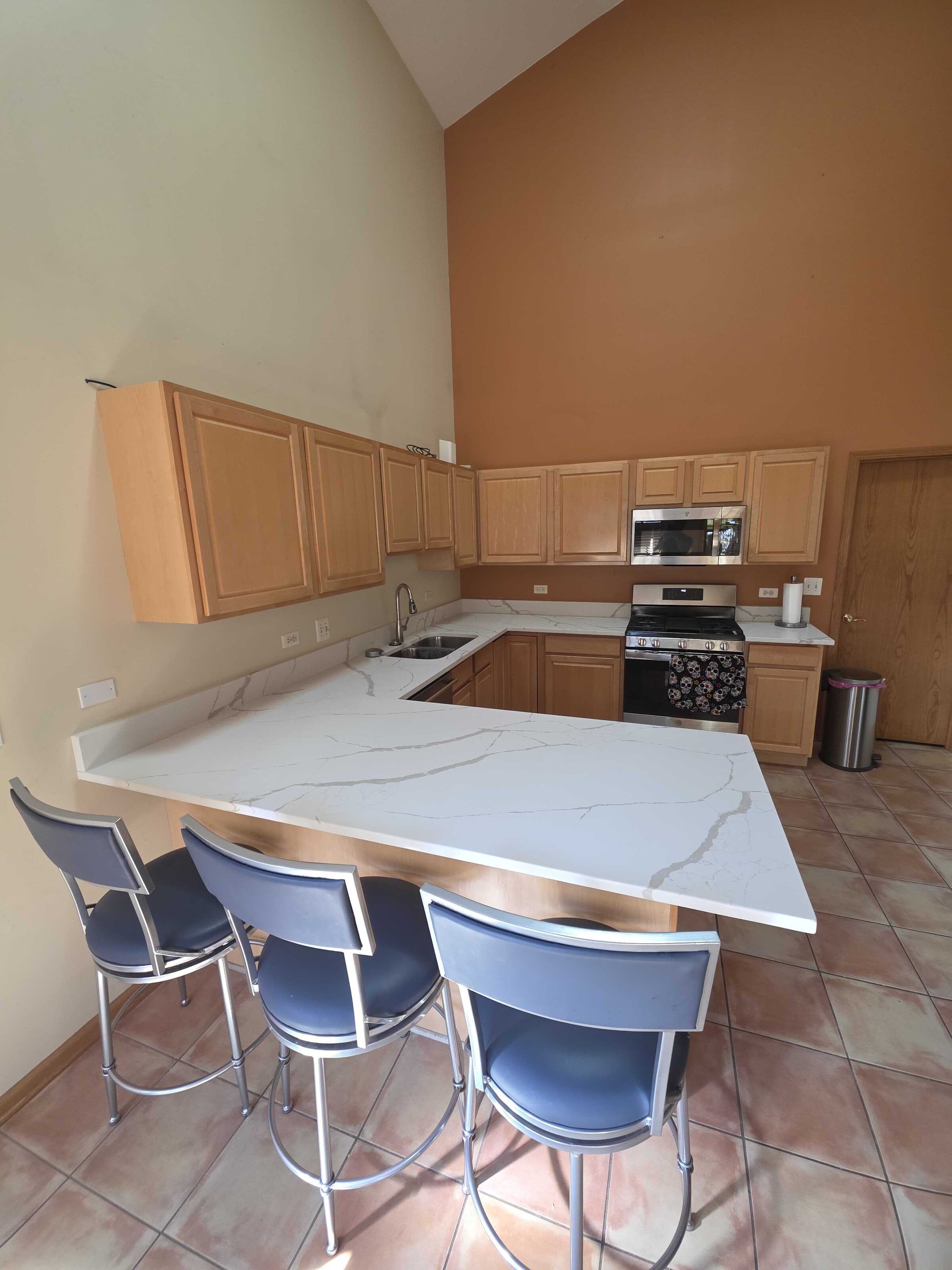
Walkthrough
On the job
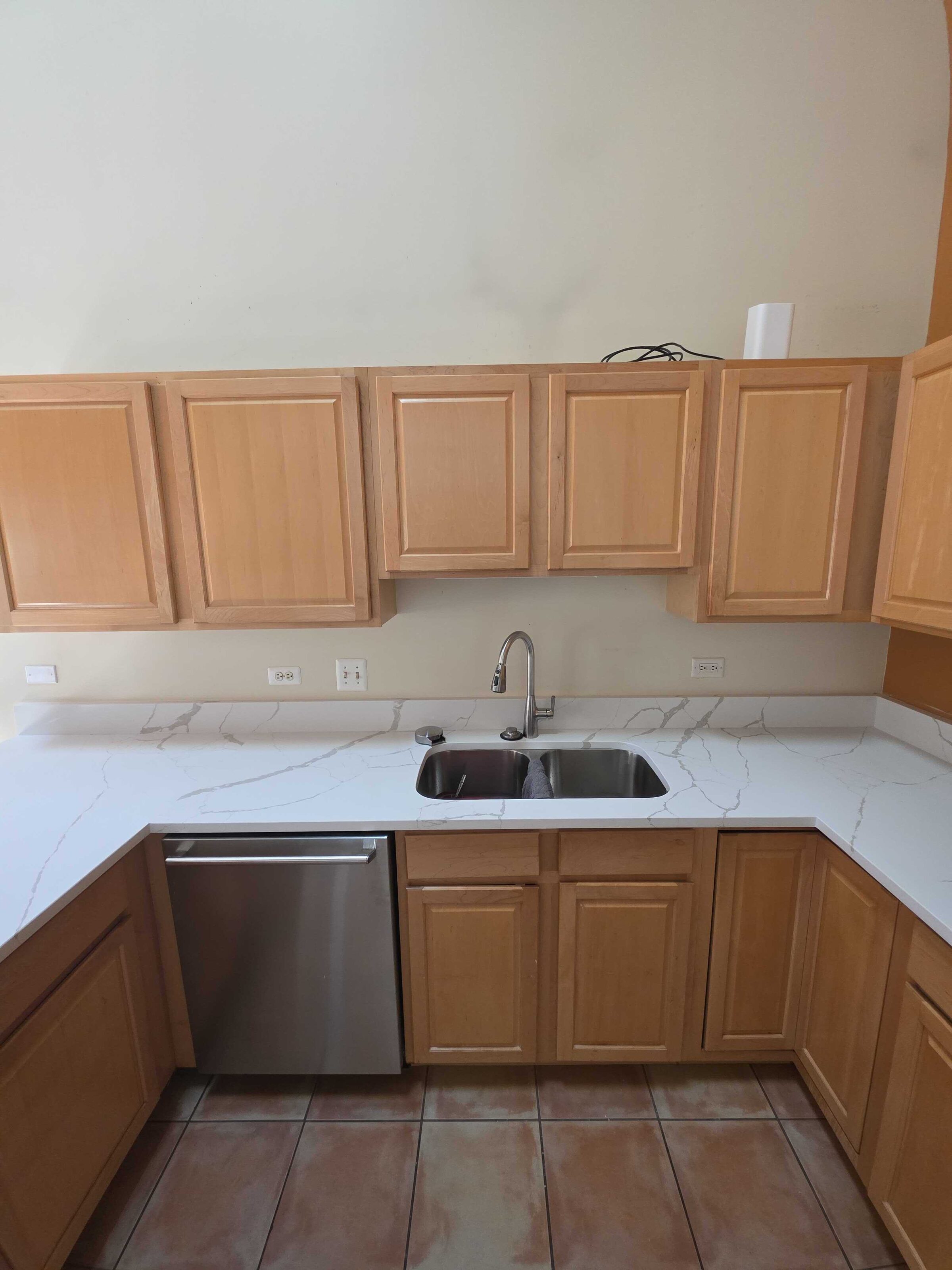
New quartz at the sink and dishwasher, oak uppers and terracotta floor 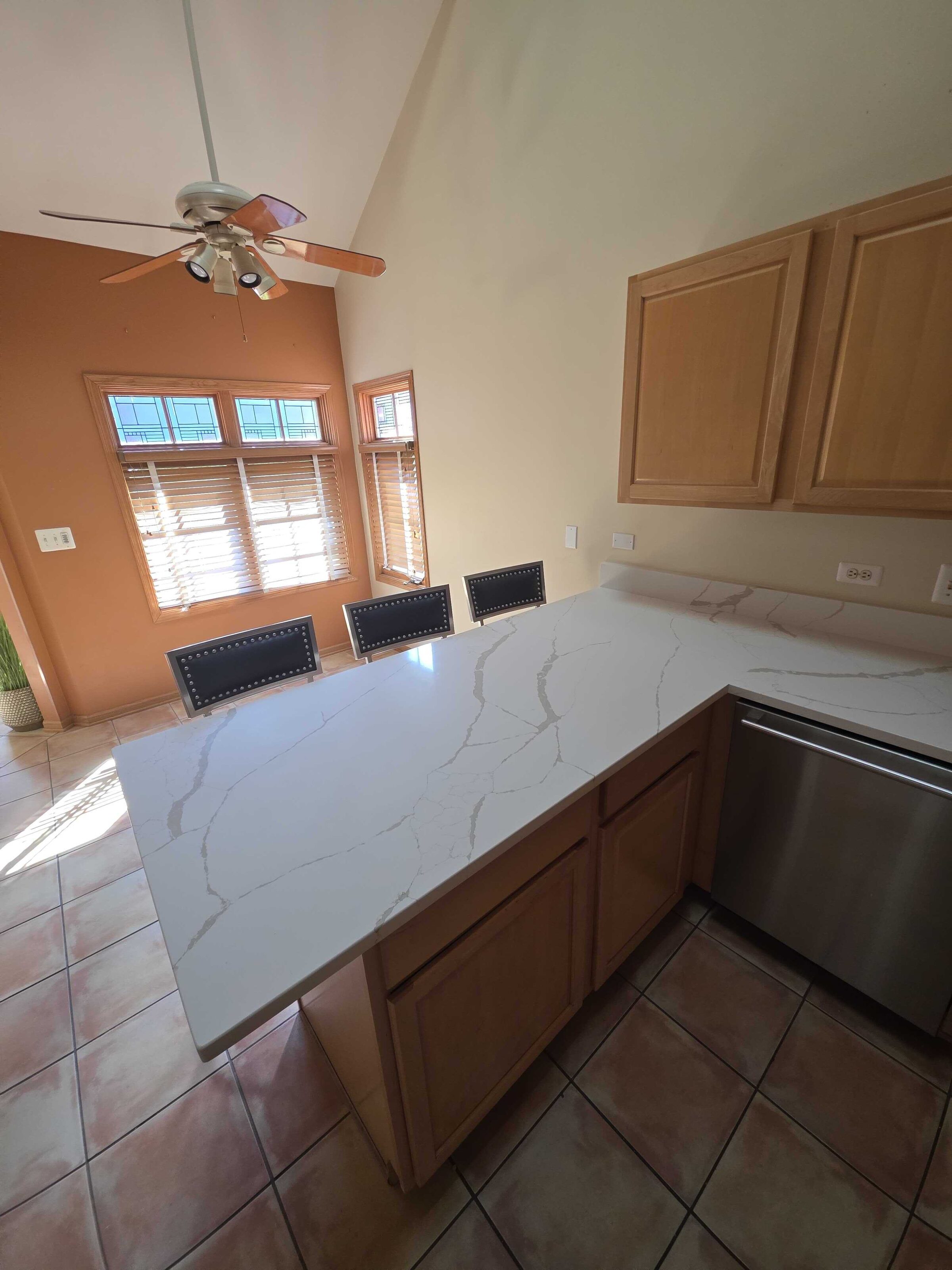
The quartz counter running to the corner window, seen from the dining end 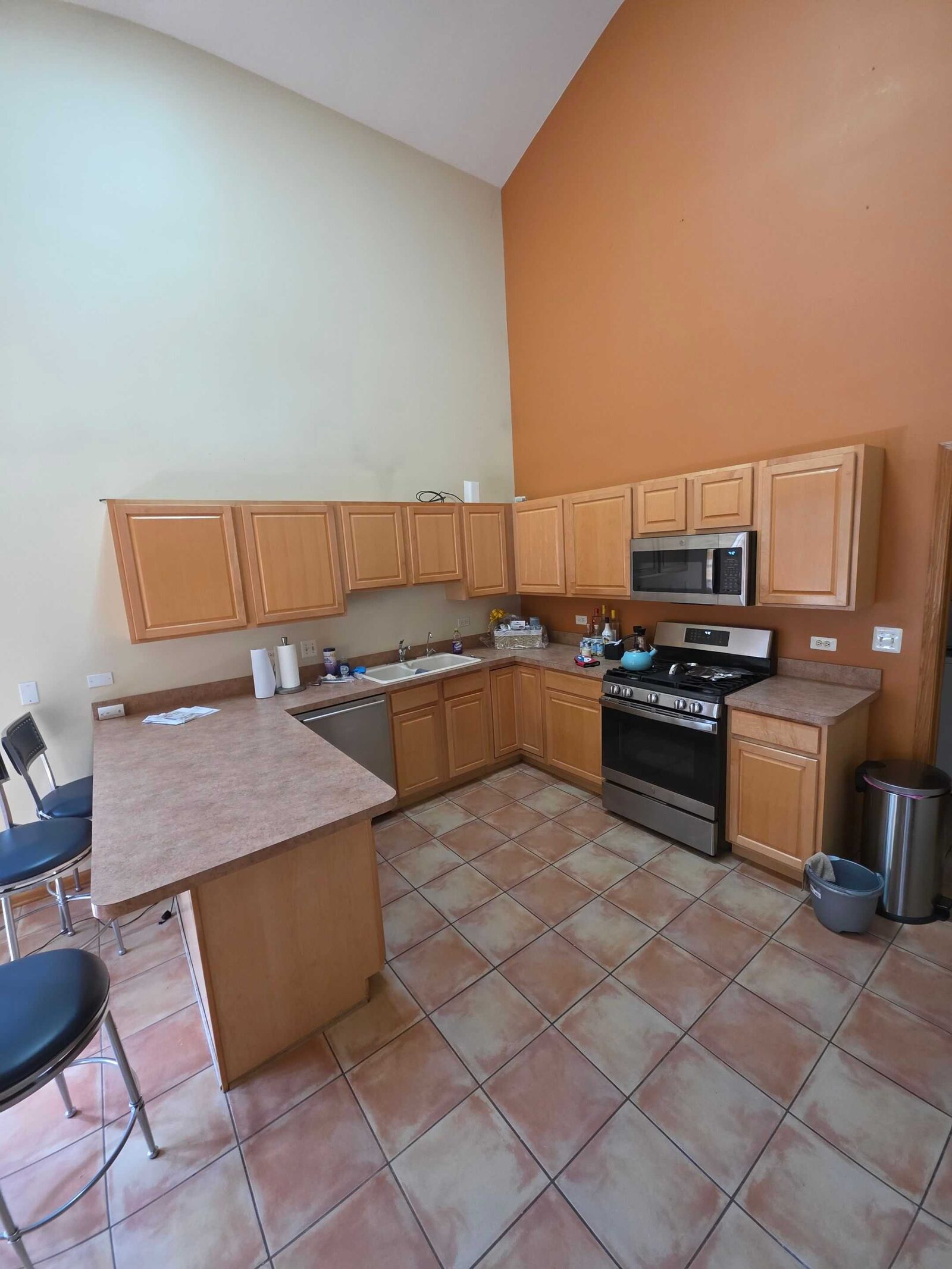
Before: the tan laminate U with the old sink and a paper-towel roll on the counter
The specification
What went in, in the owner’s own words on the job sheet.
| Detail | What we used |
|---|---|
| Completed | July 2026 |
| Material | Veined white quartz |
| Service | Quartz Countertops |
Town and month only — we do not publish a customer’s address.
About Veined white quartz
This kitchen is topped in Veined white quartz. We fabricate it in our own shop, which means the seams, the sink cutout and the edge are cut by the people who set the tops — not shipped in from a third-party shop that never sees the room.
- <a href="/countertops/">See the full countertop range →</a>
- <a href="/services/quartz-countertops/">Quartz Countertops — how the job runs →</a>
- <a href="/guides/">Homeowner guides on choosing and caring for stone →</a>
What a job this size runs
Our published installed-project ranges — the same in every town we serve.
| Kitchen size | Engineered Quartz | Granite | Quartzite | Marble |
|---|---|---|---|---|
| Galley kitchens (30–45 sqft) | $3,600–$6,750 | $4,200–$7,650 | $4,500–$8,550 | $5,100–$9,000 |
| Small kitchens (45–60 sqft) | $5,400–$9,000 | $6,300–$10,200 | $6,750–$11,400 | $7,650–$12,000 |
| Medium kitchens (60–75 sqft) | $7,200–$11,250 | $8,400–$12,750 | $9,000–$14,250 | $10,200–$15,000 |
| Large kitchens (75–90 sqft) | $9,000–$13,500 | $10,500–$15,300 | $11,250–$17,100 | $12,750–$18,000 |
| Extra large kitchens (90–120 sqft) | $10,800–$18,000 | $12,600–$20,400 | $13,500–$22,800 | $15,300–$24,000 |
Installed project ranges as of 2026-07 — template, fabrication and standard installation included. Your kitchen gets a firm number after a free in-home template.
Questions we got asked on this kind of job
Can I install my own backsplash, or should I hire a tile setter?
A straight running-bond or stacked ceramic backsplash is one of the most DIY-friendly tile jobs in a house - small format, no water exposure like a shower, and you save roughly $10-15 per square foot in labor. Hand it to a pro when the job involves glass tile (visible adhesive and cut edges), natural stone (sealing, blade chatter, breakage), herringbone or diagonal layouts (compounding alignment errors), large-format panels, or any slab product, which is fabricator work full stop. Whoever installs it, outlets are the tell: sloppy cuts around receptacles are the first thing a trained eye notices.
Can I keep my existing countertops if I replace the cabinets?
Usually not, and it is better to hear that early: granite and quartz tops rarely survive removal in reusable condition, because they are rigid, brittle, and adhered to the old boxes. Even when a slab comes off intact, new cabinets seldom match the old footprint within the tolerance stone requires. If the counters are the part you love, consider refacing or painting the existing cabinets instead of replacing the boxes.
Can I keep my existing countertops when the cabinets are replaced?
Plan on no. Old tops - especially stone - rarely survive tear-out in reusable condition, and new boxes almost never match the old footprint exactly, so even a surviving top will not fit. Budget countertops with the cabinets and sequence the project cabinets first, then template, then tops; expect 1-3 weeks on temporary plywood tops while the new counters are fabricated.
Can I paint my cabinets myself and get a result that looks professional?
You can get a good result, but almost never a factory-looking one, and the gap is not talent - it is equipment and product. Pros spray cabinet-grade coatings such as waterborne alkyds, urethane enamels, or shop-applied lacquers that level out and cure hard; DIY jobs done with wall paint and a brush tend to show brush marks and chip at the edges within a year or two. Budget a full week of evenings for degreasing, sanding, priming, and two topcoats, and use a bonding primer plus an enamel made for trim and cabinets, never ordinary wall latex. DIY makes the most sense on older cabinets you may replace anyway, or before a sale where the goal is fresh rather than flawless.
Want one like this?
Free in-home template, an honest number, and one crew from measure to install.
Ready for a real number?
Free in-home template and an honest quote — you keep your money until there's a countertop to trade it for.