
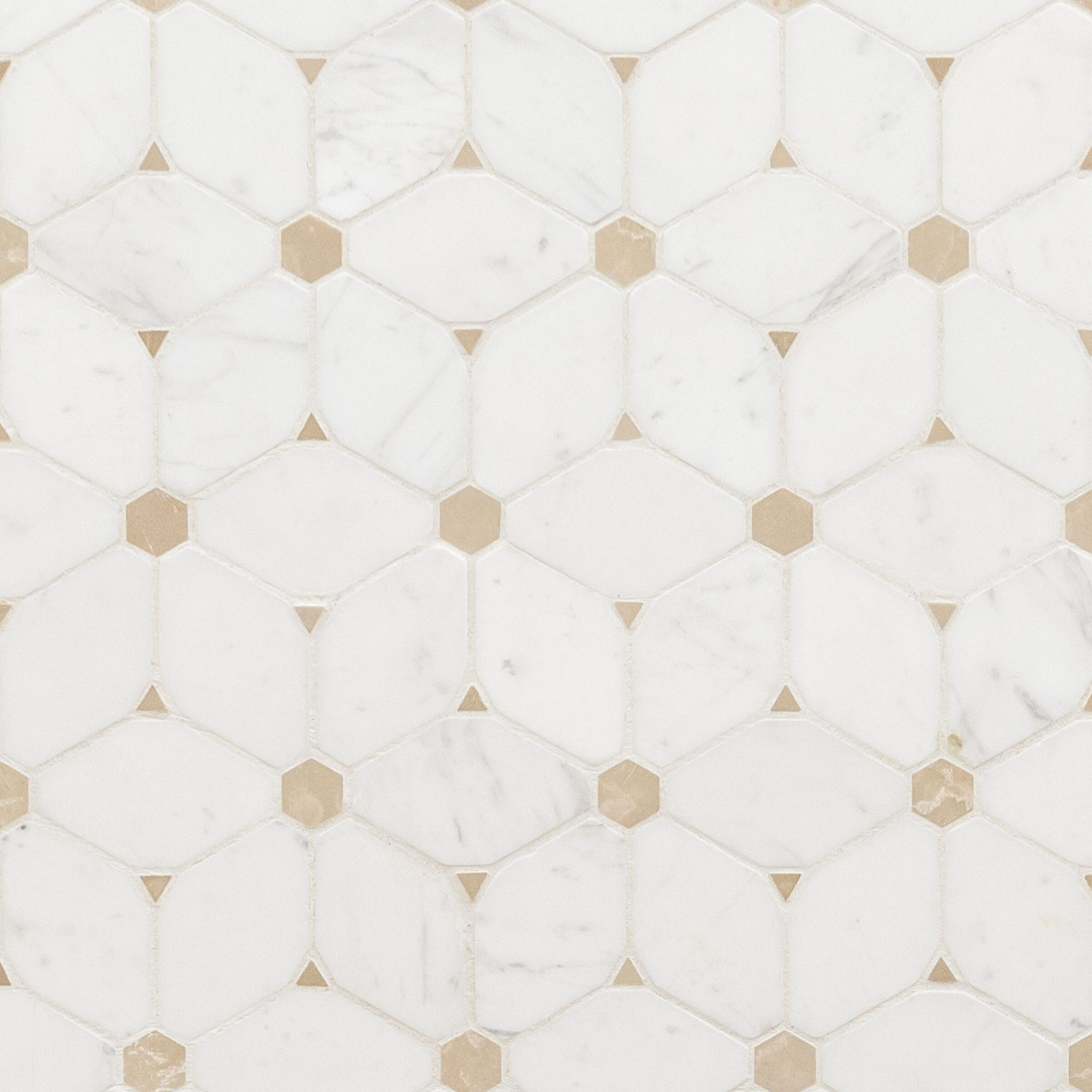
Cecily Pattern Polished
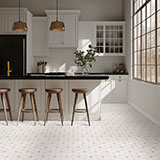
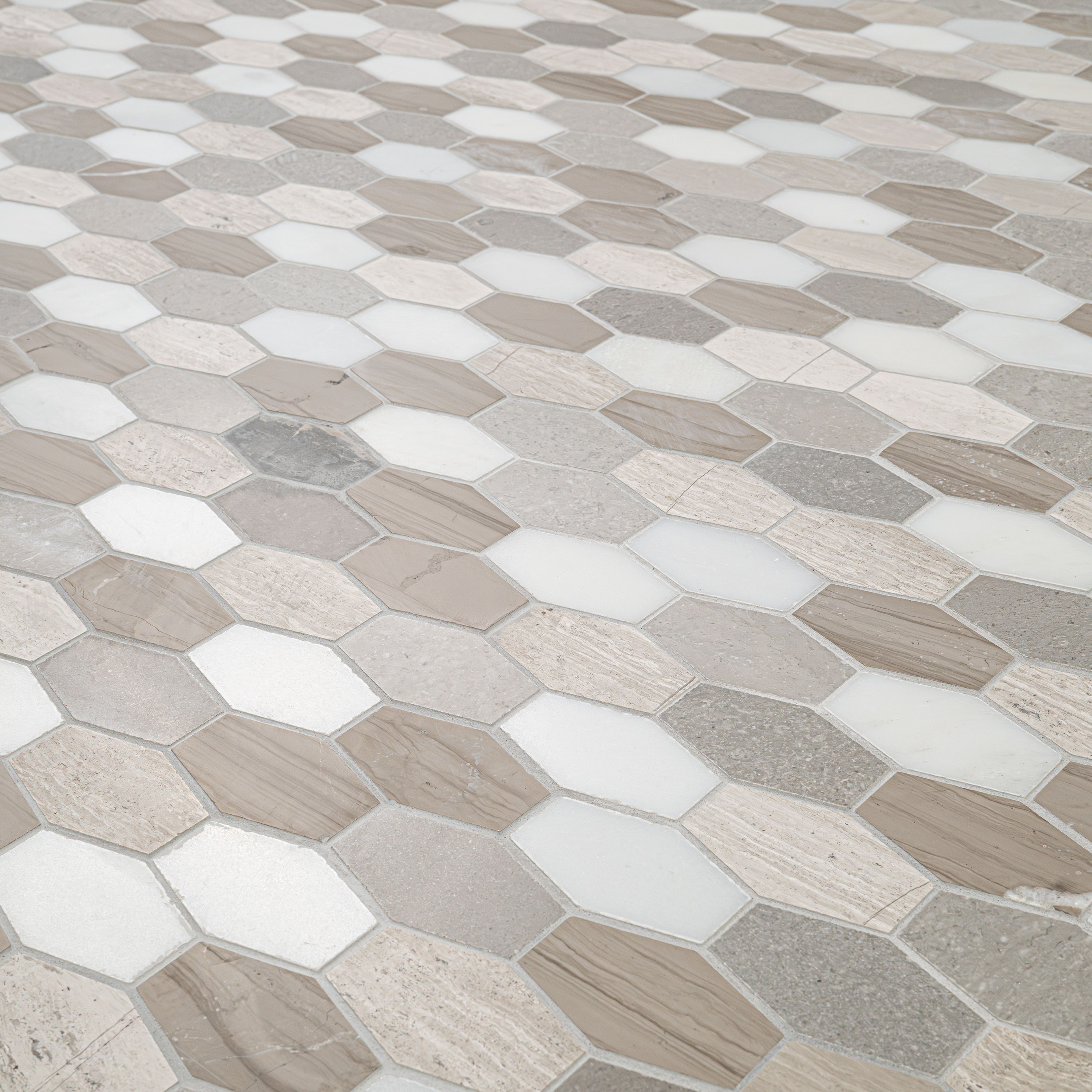
A backsplash we fabricate and install — see it in real kitchens below, then get your free quote.

Details
- Finish
- polished
Templated, fabricated, and installed by our own crew across the northwest suburbs.
How we do backsplash installation →
Free in-home quoteWhat kind of tile is Cecily Pattern Polished?
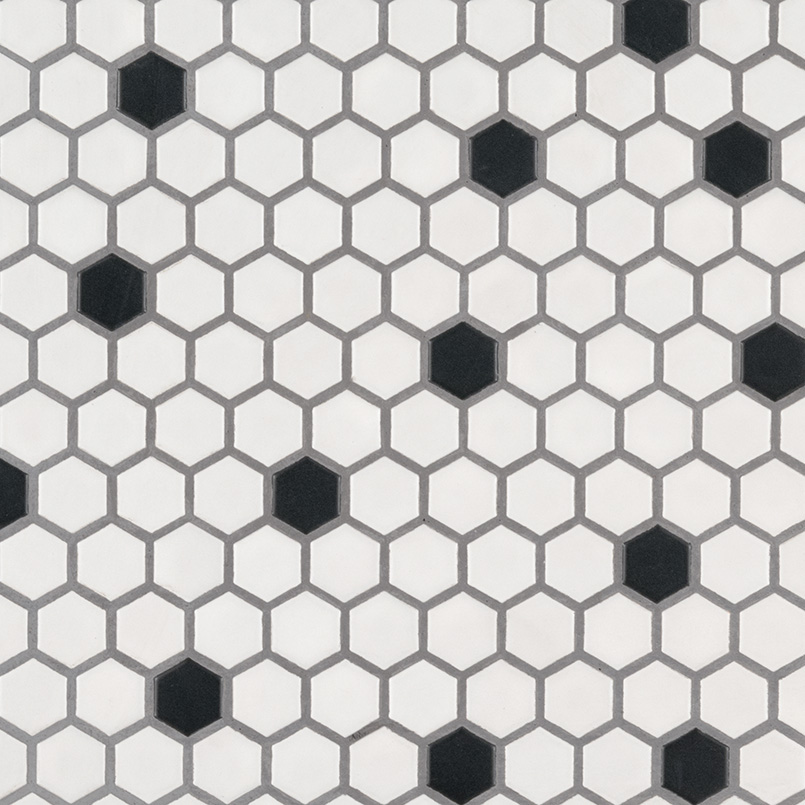
We stock Cecily Pattern Polished as marble. It reads white-warm. It comes as mesh-backed mosaic sheet, which sets faster than loose pieces. Marble is soft natural stone. Behind a range it is a commitment to sealing and to wiping acids off quickly.
About Cecily Pattern Polished
Finish is polished.
Rated 4/5 for heat and 2/5 for stains — it handles heat and will show stains. This one asks for real maintenance. If nobody in the house will do it, say so now and we will point you somewhere else.
We set it after the countertop is in, so the reveal above the counter is right and the cuts around your outlets are not guesswork. Installed, this material benchmarks around $90/sq ft in the Chicago suburbs — the table below shows the full range and where it came from.
But seriously though — get the free quote and we will bring the tape measure.
Specs
What is on the spec sheet — nothing inferred.
- Finish
- Polished
- Primary Color(s)
- White-Warm
- Material Type
- Marble
- Collection
- Bianco Dolomite
- Environmental
- Greenguard Gold, USGBC/LEED
- Product type
- Decorative Mosaics & Wall Tiles
Sizes and finishes
How it is actually sold — measured off the spec sheet, not rounded.
Sizes
Cecily Pattern Polished is made in a single size, Pattern. That makes layout simple — what you see in the sample is the module you get across the whole wall.
- Pattern
Finishes
It comes in one finish, polished.
- Polished
Where it works
The applications this surface is actually rated for.
Its maker rates Cecily Pattern Polished for countertops · flooring · wall — countertops · wall at commercial duty.
Rated for
- Countertops — residential and commercial
- Flooring — residential
- Wall — residential and commercial
What to expect once it is installed
The ratings that decide whether the finished wall matches the sample.
Certifications
On the certification side, Greenguard Gold · USGBC/LEED. The Gold standard was written for schools, which is a stricter bar than a kitchen would ever have to clear. Worth a LEED credit too, on the jobs that track them.
How it lives — durability & care
Independent ratings and the real maintenance routine for marble tile.
| Factor | Rating | What that means day to day |
|---|---|---|
| Heat | 4/5 | Stone itself is heat-stable, but a polished finish can scorch or discolor near intense heat. |
| Impact/chipping | 3/5 | Brittle at edges and corners, though the tile body is reasonably tough. |
| Moisture | 3/5 | Absorbs water; needs an impregnating sealer or it darkens and spots. |
| Scratch | 2/5 | Soft calcite scratches and scuffs from ordinary grit. |
| Stain | 2/5 | Porous; oil, wine, and pigment soak in unless sealed and periodically re-sealed. Acids also etch it. |
1–5, higher is better. Independent material ratings, not a manufacturer claim.
Care routine
- Seal natural-stone tile backsplash — Yearly · Marble, travertine, and other stone tile backsplashes are porous face AND grout: seal the whole field with a penetrating stone sealer about once a year, more often directly behind a range. Clean only with pH-neutral products — the vinegar spray that is fine on glazed ceramic will etch a stone backsplash. · Avoid: Vinegar/citrus cleaners, alkaline degreasers, steam cleaners on polished marble tile · If you skip it: medium-high — grease halos around the range soak into unsealed stone and are effectively permanent
How it gets into your kitchen
5 steps, 2–21 days end to end.
Select and order tile
Choose tile, pattern, and grout color; confirm stock. In-stock tile ships in days; special-order tile is the usual delay and can take two weeks or more.
Tip: Order 10-15 percent overage. A broken box or a bad cut without spare tile stalls the whole job; leftover tile is also your future repair kit.
Wall prep
Remove any old backsplash, repair and prime drywall, mark outlet moves and under-cabinet lighting wiring before anything is set.
Tip: This only happens after the countertops are installed — the tile has to land on the real counter line, and slab handling would endanger finished tile.
Set tile
Tile is laid out from the counter line and set in thinset mortar. Half a day for a simple subway field; up to two days for herringbone, mosaics, or full-wall runs. Mortar cures overnight before grouting.
Tip: Ask to see the dry layout before setting starts — centering on the range, how cuts fall at corners and outlets. Ten minutes here prevents the one flaw you will stare at forever.
Grout
After the overnight mortar cure: grout, clean, and tool the joints. Half a day to a day.
Tip: Grout color changes the pattern more than tile color — confirm the swatch against your actual set tile, not the showroom board.
Caulk and seal
Flexible silicone (never grout) at the counter-to-tile joint and inside corners; sealer on natural stone tile and cement grout.
Tip: The counter joint must be caulk because the counter and wall move independently — grout there cracks within a season. Check it annually and recaulk as needed.
What it costs installed
Published benchmark ranges, so you can sanity-check any quote — including ours.
| Line item | Typical range | Unit | As of |
|---|---|---|---|
| Marble tile backsplash, installed | $30–$150 | per sq ft | 2025-08 |
| GFCI outlet added during backsplash installation | $130–$300 | per project | 2023-11 |
| Kitchen backsplash project, tile (typical 30-40 sqft) | $500–$1,500 | per project | 2025-08 |
| Professional tile backsplash installation, all materials | $30–$75 | per sq ft | 2023-09 |
| Remove existing backsplash | $3–$6 | per sq ft | 2023-11 |
| Tile backsplash installed | $15–$40 | per sq ft | 2026-07 |
| Tile backsplash installed | $15–$45 | per sq ft | 2023-11 |
Regional benchmarks for the Chicago market — not an Ace quote. Your number depends on square footage, edge, cutouts and tear-out.
Sources: Fixr, 2025; BobVila.com, 2023; Inch Calculator, 2023; Angi
What to put next to it
Built from the color we measured off Cecily Pattern Polished itself, not from its name.
Measured, not guessed: #F0EDE9, very light and essentially neutral. The nearest color we hold pairings for is White Veined (Marble-Look). It reads as a neutral, so it will sit behind whatever else you choose instead of competing with it.
Cabinets
- Pure White — the bright gallery kitchen — veining supplies the movement plain white lacks. Against this surface it is close in weight, so the two will blend rather than contrast classic
- Charcoal — inverted tuxedo — dark base, light top. Against this surface it is much darker than this surface, so the tile reads as the light element classic
- Oxblood Burgundy — Dried-wine cabinetry under crisp veined white is old-London-pub-meets-gallery, and neither half will ever look dated.. Against this surface it is much darker than this surface, so the tile reads as the light element classic
- Sage Green — keeps green kitchens bright. Against this surface it is a step darker — enough separation to read as two materials current
Island
- Navy — white top lightens the dark base. Against this surface it is much darker than this surface, so the tile reads as the light element classic
- Walnut — Cool white veining over chocolate walnut is the tuxedo of islands — the wood deepens with a decade of hand oil while the stone stays crisp above it.. Against this surface it is much darker than this surface, so the tile reads as the light element classic
- Forest / Emerald — white stone keeps deep green from swallowing light. Against this surface it is much darker than this surface, so the tile reads as the light element solid
Backsplash
- Pure White — run the slab up the wall — one material, zero grout. Against this surface it is close in weight, so the two will blend rather than contrast current
Similar surfaces
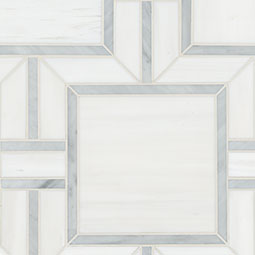
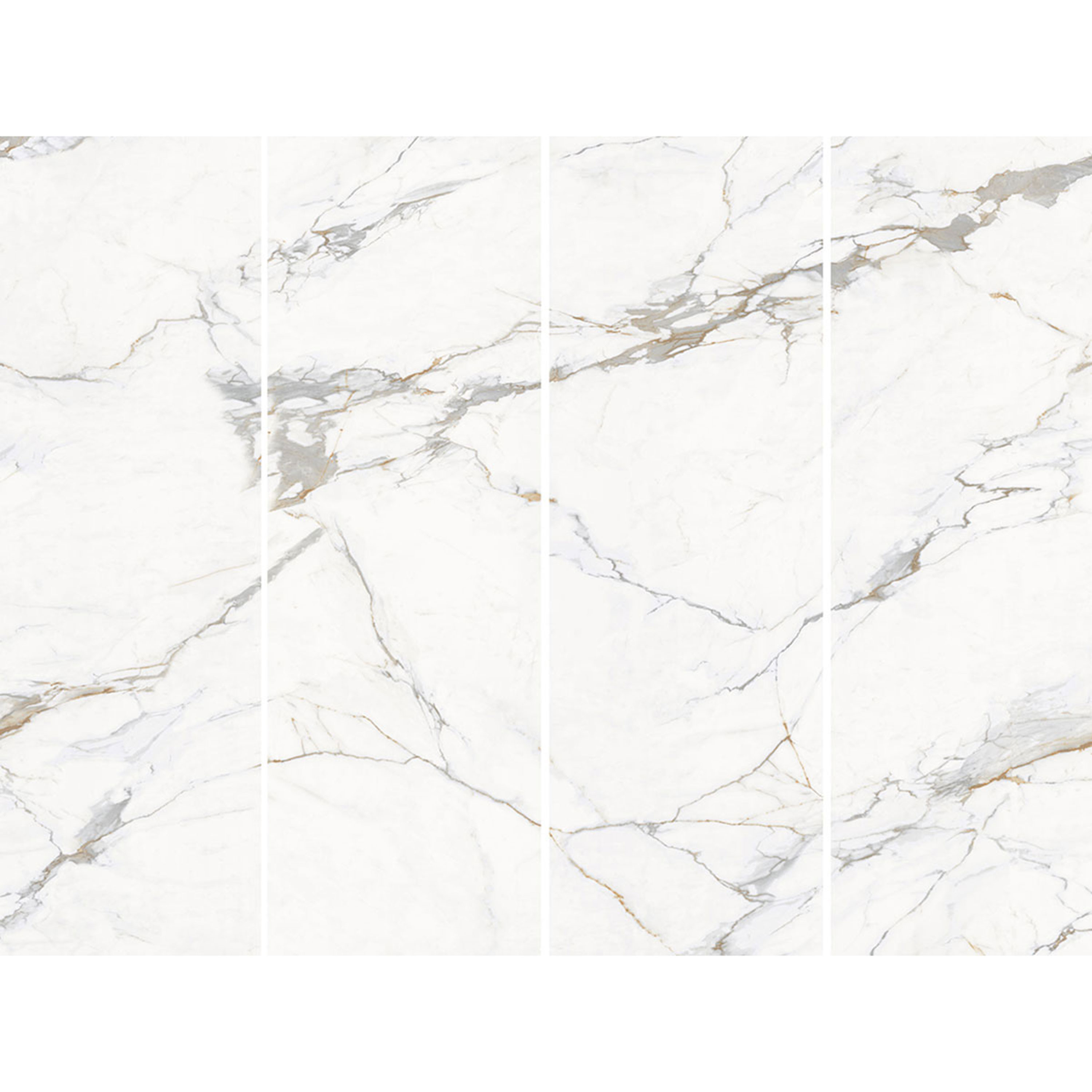
Same family — worth seeing side by side before you commit.
Questions about Cecily Pattern Polished
Answered from this product’s own spec sheet and our measurement of it.
What size is Cecily Pattern Polished?
Cecily Pattern Polished comes in one size, Pattern. One module across the whole wall keeps the layout simple — what you approve in the sample is what you get.
Where can I use Cecily Pattern Polished?
Its maker rates it for countertops · flooring · wall. We hold to that rating when we quote — installing outside it is how a warranty claim gets denied.
What color is Cecily Pattern Polished, really?
We measured its own swatch at #F0EDE9 — very light and essentially neutral. It sits close to neutral, so it takes direction from the cabinets rather than fighting them. Names are marketing; that number is what the camera saw.
What is Cecily Pattern Polished made of?
Cecily Pattern Polished is a marble tile, which is what decides how it is cared for — see the sealing answer below.
Does Cecily Pattern Polished need sealing?
Yes. Marble is porous. It wants sealing on installation and re-sealing periodically, and it will etch where an acid sits on it — lemon, wine, some cleaners. Beautiful, and a real commitment.
Questions about this surface
Can I install a tile backsplash myself?
Of the three projects, this is the most DIY-friendly: small area, no structural stakes, forgiving timeline. The skills that separate good from regrettable are layout planning around outlets and edges, straight cuts (rent a wet saw), consistent spacing, and clean grout work - and buy 10 to 15 percent extra tile for cuts and breakage. Professional labor runs roughly $5 to $20 per square foot if you decide midway that a flawless finish matters more than the savings.
Can I install my own backsplash, or should I hire a tile setter?
A straight running-bond or stacked ceramic backsplash is one of the most DIY-friendly tile jobs in a house - small format, no water exposure like a shower, and you save roughly $10-15 per square foot in labor. Hand it to a pro when the job involves glass tile (visible adhesive and cut edges), natural stone (sealing, blade chatter, breakage), herringbone or diagonal layouts (compounding alignment errors), large-format panels, or any slab product, which is fabricator work full stop. Whoever installs it, outlets are the tell: sloppy cuts around receptacles are the first thing a trained eye notices.
Ceramic or porcelain - does the difference actually matter on a backsplash?
Less than the sales pitch suggests. Porcelain’s advantages - density, near-zero water absorption, chip resistance - matter most on floors; a backsplash never gets walked on, so glazed ceramic holds up fine for decades there. Choose on looks and price, with two caveats: porcelain is the better canvas for convincing marble and brick looks, and ceramic is markedly easier to cut if you are DIYing.
Do I have to tear out the old backsplash, or can new tile go over it?
Tiling over existing tile is technically possible on a sound, flat installation, but most professionals recommend removal: doubling up adds thickness that crowds electrical outlets, window trim, and the counter joint. Removal typically costs $3 to $6 per square foot and often takes chunks of drywall with it, so expect a wall-repair line on the quote - that is normal, not padding.
Words that show up on a quote
Sixteen terms fabricators use as if everyone knows them.
- Mohs hardness
- A 1-10 mineral hardness scale used to compare countertop scratch resistance. Marble sits around 3-4 (scratches easily), granite 6-7, quartz and quartzite about 7, porcelain 7-8. A steel knife blade is roughly 5.5 — materials above that resist kitchen-knife scratches.
- Apron-front sink
- Also called a farmhouse sink: a deep bowl whose front face is exposed, replacing a strip of the cabinet front. Requires a modified, reinforced sink base - fireclay and cast iron versions commonly weigh 100-200 lb - and a countertop cut that wraps three sides of the bowl instead of a simple oval.
- Arris
- The sharp line where two surfaces of a countertop meet, such as the top and the edge face. Easing the arris means softening that line slightly so it resists chipping and feels smooth.
- Dolomitic marble
- A calcium-magnesium stone frequently sold as "soft quartzite" or under names like "super white." It looks like quartzite but etches and scratches like marble. Verify any quartzite purchase with a lemon-juice test on a sample: true quartzite will not etch.
- Edge grain
- Butcher-block construction where boards are glued with their long edges up, showing parallel strips of grain. More stable and affordable than end grain (the checkerboard of growth rings used on chopping blocks) and the standard construction for wood countertops.
- Edge profile
- The shape a fabricator grinds and polishes into the exposed front edge of a countertop - from a plain eased square to decorative curves like ogee. It affects style, chip resistance, cleaning effort, and price.
- Engineered quartz
- A factory-made slab of roughly 90% ground natural quartz mineral bound with ~10% polymer resin and pigments. Non-porous and never needs sealing, but the resin limits heat and UV tolerance. Sold under brands like Cambria, Silestone, Caesarstone, and LG Viatera.
- Etching
- A dull, slightly rough mark left when acid (lemon, vinegar, wine, some cleaners) chemically dissolves the polished surface of a calcium-based stone like marble. Etching is not a stain: sealer cannot prevent it, and removing it requires re-polishing the stone.
- Laminated edge
- An edge thickened by gluing a second strip of matching stone flat beneath the front edge, doubling the apparent slab thickness; the glue line remains visible on the edge face.
- Mitered edge
- An edge built from two stone pieces each cut at 45 degrees and epoxied so the seam hides at the corner, making thin stone read as a much thicker slab.
- Ogee
- An S-shaped decorative edge profile: a concave sweep on top flowing into a convex curve below. A classic choice for traditional and formal kitchens.
- Sink gauge
- The thickness of the steel in a stainless sink; lower numbers mean thicker metal. 16 gauge is about 0.063 in (1.59 mm) and resists dents and noise best; 18 gauge is about 0.047 in (1.2 mm) and is the value standard for residential bowls. Thinner than 18 gauge, flex and drumming become noticeable.
- Sink reveal
- The amount of sink rim left visible at an undermount cutout. A positive reveal leaves a sliver of rim showing (forgiving to fabricate, the common default); a zero or flush reveal aligns counter and bowl edges exactly (precision work that costs more); a negative reveal overhangs the bowl (sleek, but the thin lip can chip and the hidden rim traps grime). The reveal is set permanently when the countertop is cut.
- Sintered stone
- A slab made by compacting mineral powders and clays under extreme pressure and heat ("sintering") until the particles fuse — no resin binder. Heat-proof, UV-stable, and non-porous; Dekton and Neolith are the best-known brands. Often grouped with porcelain slab countertops.
- Stone sealer
- A penetrating liquid applied to porous natural stone (granite, quartzite, marble) and concrete that slows liquid absorption so spills can be wiped before they stain. Wears off with use — most stones need resealing every 6-24 months. A quick test: if water stops beading and starts darkening the stone, it is time.
- Waterfall edge
- A countertop treatment where the surface turns 90 degrees and continues down the side of an island or cabinet run to the floor, usually with mitered, book-matched corners.
Want this in your kitchen?
We supply and install Cecily Pattern Polished out of our Elk Grove Village shop — templated digitally, cut to your cabinets, installed by our own crew.
Ready for a real number?
Free in-home template and an honest quote — you keep your money until there's a countertop to trade it for.